
Many people delay spine surgery in Pune because they believe it will keep them away from work for months. This is one of the most common misconceptions about modern spine care. Advances in surgical techniques have made many spine procedures safer, less invasive, and associated with faster recovery for appropriately selected patients.
If you’re struggling with persistent back pain, sciatica, slipped disc, or spinal stenosis, consulting an experienced Spine Surgeon in Pune like Dr. Rajesh Parasnis can help you understand the best treatment options based on your condition.
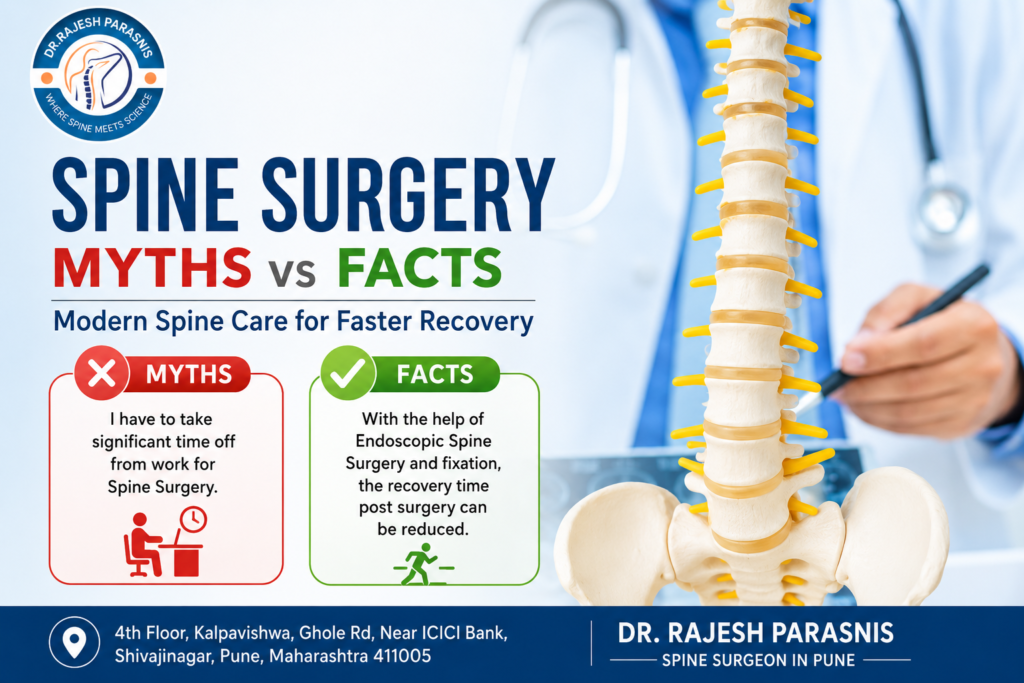
Myth: Spine Surgery Means Months Away from Work
Many patients believe that undergoing spine surgery automatically means prolonged hospitalization and an extended leave from work. While recovery time depends on the type of surgery, the patient’s overall health, and the nature of their job, this belief is often based on older surgical techniques rather than current practices.
Fear of long recovery often causes patients to postpone treatment, allowing their symptoms to worsen over time.
Fact: Modern Spine Surgery Can Help Reduce Recovery Time
With advanced techniques such as Endoscopic Spine Surgery and minimally invasive fixation procedures, many patients experience:
- Smaller incisions
- Less muscle damage
- Reduced post-operative pain
- Shorter hospital stay
- Earlier return to walking and daily activities
- Faster return to desk-based work in suitable cases
However, recovery timelines vary for each patient. Individuals with physically demanding jobs may require more time before returning to work than those with sedentary occupations.
When Should You Consider Spine Surgery?
A Spine Surgeon in Pune may recommend surgery when:
- Persistent back or neck pain does not improve with conservative treatment
- Severe slipped disc causing leg pain (sciatica)
- Numbness or weakness in the arms or legs
- Spinal stenosis
- Nerve compression affecting daily activities
- Progressive neurological symptoms
Surgery is generally considered only after a thorough clinical evaluation and when non-surgical treatments are no longer effective.
Benefits of Early Consultation
Delaying treatment due to myths may lead to worsening nerve compression and reduced quality of life. Early consultation allows timely diagnosis and appropriate treatment planning, which may include medications, physiotherapy, injections, or surgery depending on your condition.
Why Choose Dr. Rajesh Parasnis?
Dr. Rajesh Parasnis is an experienced Spine Surgeon in Pune specializing in the diagnosis and treatment of various spinal disorders. His patient-centered approach focuses on accurate diagnosis, conservative management whenever possible, and advanced surgical techniques when surgery is required.
Whether you are experiencing chronic back pain, cervical problems, slipped disc, or sciatica, Dr. Parasnis offers personalized spine treatment in Pune designed to help patients regain mobility and improve their quality of life.
Conclusion
Don’t let outdated myths prevent you from seeking treatment. Modern spine surgery in Pune has evolved significantly, and many patients are able to recover faster than they expect when treated with appropriate minimally invasive techniques. The right diagnosis and treatment plan can help you return to your normal activities safely and confidently.
If you’re suffering from persistent back or neck pain, schedule a consultation with Dr. Rajesh Parasnis to explore the most suitable spine treatment in Pune for your condition.
Frequently Asked Questions (FAQs)
1. Does spine surgery always require months of bed rest?
No. Many modern minimally invasive spine procedures allow patients to start walking within hours or the next day, with recovery depending on the procedure and individual health.
2. When can I return to work after spine surgery?
The timeline varies based on your surgery and the type of work you do. Patients with desk jobs often return sooner than those performing heavy physical labor.
3. Is surgery the first treatment for back pain?
No. Most spine conditions are initially managed with medications, physiotherapy, exercise, and lifestyle modifications. Surgery is recommended only when necessary.
4. What conditions can endoscopic spine surgery treat?
It may be used for selected cases of slipped disc, sciatica, spinal stenosis, and certain nerve compression disorders, depending on clinical evaluation.
5. When should I consult a spine surgeon?
If your back or neck pain persists for several weeks, radiates to the arms or legs, or causes weakness, numbness, or difficulty performing daily activities, you should consult a spine specialist.