
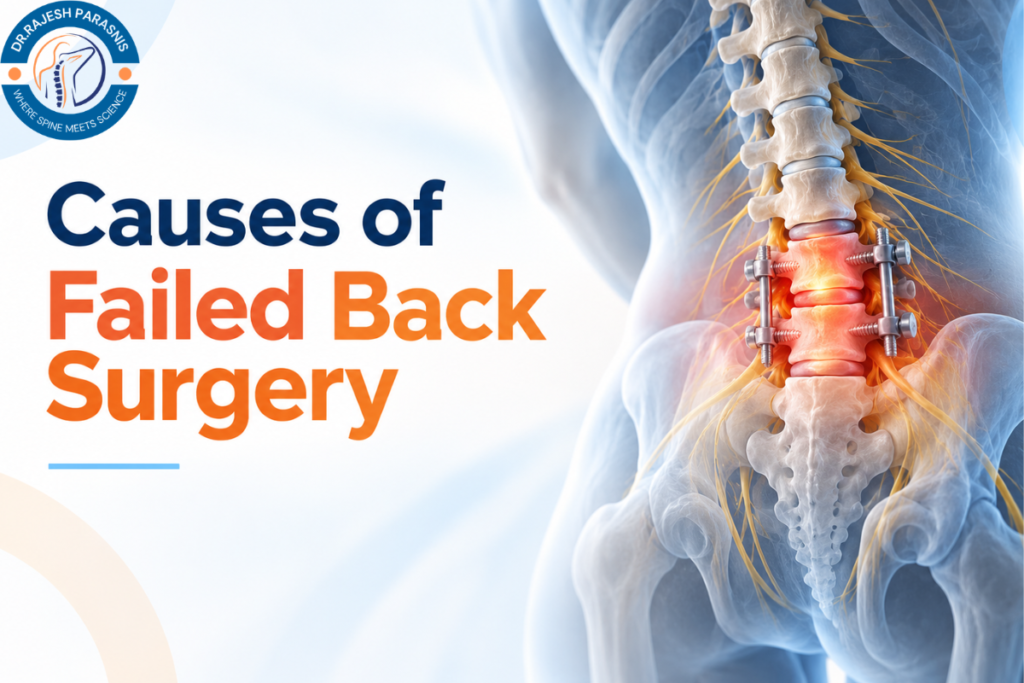
Spine surgery is performed to relieve pain, improve mobility, and address problems affecting the spinal nerves or structures. However, some patients may continue to experience back pain, leg pain, stiffness, or other symptoms even after surgery. This condition is commonly referred to as Failed Back Surgery Syndrome (FBSS) or Persistent Spinal Pain Syndrome.
Failed back surgery does not always mean that the surgery was performed incorrectly. The spine is a complex structure involving bones, discs, nerves, muscles, and ligaments. Several factors before, during, and after surgery can influence recovery and long-term outcomes.
At Dr. Rajesh Parasnis – Spine Specialist in Pune, patients with persistent pain after spine surgery undergo detailed evaluation to identify the underlying cause and determine suitable treatment options. Dr. Rajesh Parasnis
What Is Failed Back Surgery Syndrome?
Failed Back Surgery Syndrome refers to ongoing or recurring symptoms after spinal surgery. These symptoms may include:
- Persistent lower back pain
- Pain radiating to the legs (sciatica)
- Numbness or tingling sensations
- Weakness in the limbs
- Difficulty walking or performing daily activities
- Recurrence of symptoms after initial improvement
The condition requires careful assessment because the reason for pain may be different from the original spinal problem.
Common Causes of Failed Back Surgery
1. Incorrect Diagnosis Before Surgery
A correct diagnosis is the foundation of successful spine treatment.
Sometimes, back pain may originate from multiple sources such as:
- Nerve compression
- Sacroiliac joint problems
- Muscle-related issues
- Hip conditions
- Other spinal levels
If the actual source of pain is not identified before surgery, symptoms may continue even after the procedure.
2. Persistent or Recurrent Nerve Compression
One of the common reasons for continued pain after spine surgery is ongoing pressure on spinal nerves.
This may happen due to:
- Incomplete removal of disc material
- Scar tissue formation around nerves
- Recurrent disc herniation
- New narrowing of the spinal canal
Nerve-related symptoms may include shooting pain, numbness, or weakness.
3. Recurrent Disc Problems
A previously treated disc may develop problems again, especially if the underlying spinal degeneration continues.
Factors that may contribute include:
- Disc degeneration
- Excessive stress on the spine
- Age-related changes
- Improper rehabilitation
A detailed clinical assessment helps determine whether additional treatment is required.
4. Adjacent Segment Disease
The spine functions as a connected unit. After fusion surgery, increased stress may develop on the spinal segments above or below the treated area.
This may lead to:
- New disc degeneration
- Nerve compression
- New back or leg pain
Regular follow-up and maintaining spinal health can help monitor these changes.
5. Spinal Instability or Incomplete Correction
Some spinal conditions require proper alignment and stabilisation.
If instability remains after surgery, patients may experience:
- Continued mechanical back pain
- Reduced mobility
- Difficulty with daily activities
Advanced imaging and clinical evaluation help assess spinal stability.
6. Scar Tissue Formation
After spine surgery, scar tissue can naturally develop during healing.
In some cases, excessive scar formation around nerve roots may cause:
- Nerve irritation
- Leg pain
- Burning sensations
However, not all scar tissue causes symptoms. The symptoms must be correlated with examination and imaging findings.
7. Poor Rehabilitation After Surgery
Recovery does not end after surgery. Rehabilitation plays an important role in restoring strength and movement.
Factors that may affect recovery include:
- Lack of guided physiotherapy
- Poor posture habits
- Weak core muscles
- Returning to heavy activities too early
A structured rehabilitation plan can support long-term recovery.
8. Lifestyle and Health Factors
Certain factors may influence healing after spine surgery, including:
- Smoking
- Obesity
- Diabetes
- Poor bone health
- Lack of physical activity
Managing these factors can improve overall spine health and recovery.
Can Failed Back Surgery Be Treated?
Treatment depends on the exact cause of persistent symptoms.
Management options may include:
Non-Surgical Treatment
- Physiotherapy
- Medication
- Lifestyle modification
- Targeted injections
- Rehabilitation programs
Advanced Treatment Options
For selected patients, further procedures such as revision spine surgery may be considered after detailed evaluation.
At Dr. Rajesh Parasnis – Spine Specialist in Pune, treatment decisions are based on symptoms, physical examination, imaging findings, and individual patient requirements. Dr. Rajesh Parasnis
When Should You Consult a Spine Specialist?
You should seek expert evaluation if you experience:
- Persistent pain months after spine surgery
- Increasing weakness or numbness
- Difficulty walking
- Loss of bladder or bowel control
- Return of previous symptoms after improvement
Early evaluation can help identify the cause and prevent worsening problems.
Frequently Asked Questions (FAQs)
Why does back pain continue after spine surgery?
Back pain may continue due to several reasons, including recurrent disc problems, nerve compression, spinal instability, incorrect diagnosis, or rehabilitation-related issues.
Does failed back surgery mean the surgery was unsuccessful?
Not necessarily. Persistent symptoms can occur due to multiple factors related to spinal healing, disease progression, or other pain sources.
Can revision spine surgery help after failed back surgery?
Revision surgery may help selected patients when a clear structural problem is identified. A detailed evaluation is necessary before considering another procedure.
How can failed back surgery be prevented?
Accurate diagnosis, appropriate surgical planning, advanced surgical techniques, and proper rehabilitation can help improve outcomes.
Conclusion
Persistent pain after spine surgery can be frustrating, but understanding the underlying cause is the first step toward effective management. Failed back surgery requires a detailed evaluation rather than assuming that another surgery is always needed.
If you are experiencing ongoing pain after spine surgery, consult Dr. Rajesh Parasnis – Spine Specialist in Pune for expert assessment and personalised treatment guidance. Dr. Rajesh Parasnis