
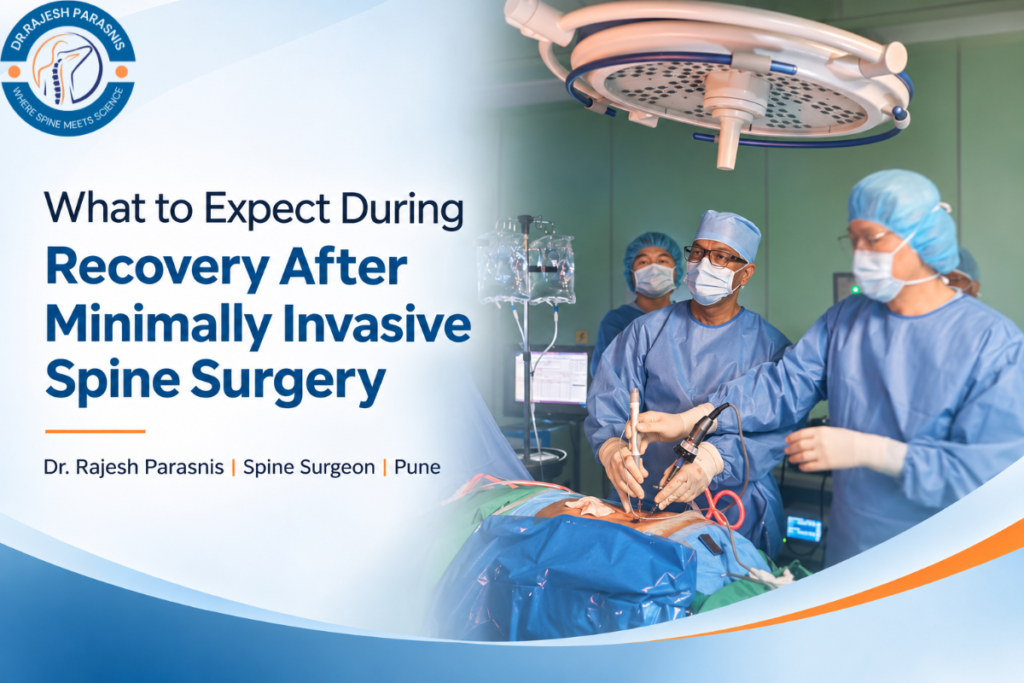
Minimally invasive spine surgery is designed to treat selected spinal conditions through smaller incisions and with less disruption to surrounding muscles and tissues compared with some traditional open procedures.
For many patients, one of the most important questions before surgery is:
“How long will recovery take, and when can I return to normal activities?”
The answer depends on several factors, including the type of surgery, the spinal condition being treated, your age, overall health, physical fitness, occupation, and whether more than one spinal level is involved.
For patients considering minimally invasive spine surgery in Pune, Dr. Rajesh Parasnis evaluates each case individually and explains the expected recovery process based on the specific procedure and diagnosis.
What Is Minimally Invasive Spine Surgery?
Minimally invasive spine surgery, often called MISS, uses specialized instruments and imaging guidance to reach the affected area of the spine through smaller surgical openings.
Depending on the condition, it may be used for procedures such as:
- Disc surgery
- Nerve decompression
- Treatment of spinal stenosis
- Selected spinal fusion procedures
- Certain cases of slipped disc
- Some degenerative spinal conditions
The aim is to treat the underlying spinal problem while minimizing unnecessary injury to nearby tissues.
However, not every patient or spine condition is suitable for a minimally invasive approach. The decision should always be based on diagnosis, anatomy, severity of symptoms, and clinical examination.
What Happens Immediately After Surgery?
After surgery, you will usually be monitored in the recovery area while the effects of anaesthesia wear off.
The medical team may check:
- Blood pressure and heart rate
- Oxygen levels
- Strength and movement in the legs or arms
- Sensation
- Pain levels
- Surgical wound
- Ability to pass urine
- Overall neurological function
Some patients may be encouraged to sit, stand, or walk on the same day or the following day, depending on the type of surgery.
Is Pain Normal After Minimally Invasive Spine Surgery?
Some pain or soreness around the surgical area is expected.
Patients may experience:
- Incisional discomfort
- Muscle soreness
- Mild stiffness
- Temporary fatigue
- Discomfort while changing position
Pain is usually managed with prescribed medication.
The amount of pain varies from person to person and also depends on the type and complexity of surgery. Minimally invasive techniques may reduce tissue disruption in selected cases, but they do not mean that recovery will be completely pain-free.
How Soon Can You Walk After Surgery?
Walking is often encouraged relatively early after minimally invasive spine surgery.
For many procedures, patients may begin walking with assistance within hours or by the next day.
Early movement can help:
- Improve circulation
- Reduce stiffness
- Support muscle activity
- Lower the risk of blood clots
- Gradually restore confidence in movement
However, the walking plan should always follow the surgeon’s instructions.
Some patients may need a walker or support initially, especially if they had significant weakness before surgery.
How Long Will You Stay in the Hospital?
Hospital stay depends on the type of operation and the patient’s overall health.
Some minimally invasive procedures may allow discharge within a short period, while more complex surgeries may require a longer hospital stay.
Before discharge, the medical team usually confirms that the patient can:
- Walk safely
- Control pain with oral medicines
- Eat and drink comfortably
- Pass urine normally
- Understand wound-care instructions
- Follow activity restrictions
What Should You Expect During the First Week?
The first week is mainly about protecting the surgical area and gradually increasing activity.
You may experience some tiredness, stiffness, or soreness.
Common recommendations may include:
- Short walks several times a day
- Avoiding heavy lifting
- Avoiding repeated bending or twisting
- Taking prescribed medicines
- Keeping the wound clean and dry
- Following instructions for dressing changes
- Getting adequate sleep and hydration
It is normal for energy levels to be lower than usual during the early recovery period.
How Should You Care for the Surgical Wound?
Your surgeon will give specific instructions regarding dressing and wound care.
In general:
- Keep the wound clean
- Avoid unnecessary touching
- Follow instructions regarding bathing
- Do not apply creams or powders unless advised
- Watch for redness, swelling, discharge, or increasing pain
Contact the treating team if the wound becomes increasingly painful, red, swollen, or starts to discharge.
When Can You Return to Work?
Return to work varies significantly.
A person with a desk-based job may return sooner than someone whose work involves lifting, bending, driving for long hours, or manual labour.
Factors that influence return to work include:
- Type of surgery
- Number of spinal levels treated
- Pain control
- Physical strength
- Type of occupation
- Need for physiotherapy
- Overall recovery progress
Rather than following a fixed number of days, your surgeon may advise return to work based on how well you are healing.
Can You Sit Normally After Spine Surgery?
Yes, but prolonged sitting may initially cause discomfort.
During early recovery, patients are often advised to:
- Sit for shorter periods
- Change position regularly
- Use a supportive chair
- Avoid deep or very soft seating
- Stand and walk periodically
Gradually, sitting tolerance usually improves as recovery progresses.
When Can You Drive?
Driving should be avoided until it is safe to control the vehicle comfortably.
You should generally be able to:
- Sit without significant pain
- Move your neck and body safely
- React quickly in an emergency
- Enter and exit the vehicle comfortably
- Avoid medications that impair alertness
The exact timing should be confirmed with your surgeon.
Will You Need Physiotherapy?
Some patients benefit from physiotherapy after minimally invasive spine surgery.
Physiotherapy may help with:
- Mobility
- Flexibility
- Core strength
- Back and neck muscle conditioning
- Posture
- Balance
- Gradual return to activity
Not every patient requires the same rehabilitation programme.
The timing of physiotherapy depends on the operation and individual recovery.
When Can You Start Exercise?
Walking is often the first form of exercise recommended after surgery.
More strenuous exercise should be introduced gradually.
Depending on the procedure, your surgeon may later allow:
- Gentle stretching
- Core strengthening
- Stationary cycling
- Swimming
- Light gym exercises
- Functional training
Activities such as heavy weightlifting, running, contact sports, or intense bending may need to be delayed until healing is adequate.
Can You Climb Stairs After Surgery?
Many patients are able to climb stairs carefully during early recovery if their strength and balance are adequate.
Initially:
- Use a railing
- Move slowly
- Avoid carrying heavy objects
- Ask for assistance if you feel weak or unsteady
If your surgery involved significant nerve weakness before the operation, stair climbing may take longer to become comfortable.
How Long Does Full Recovery Take?
There is no single recovery timeline for every patient.
A simple decompression procedure may have a shorter recovery period than a fusion or more complex operation.
Recovery depends on:
- Age
- General fitness
- Type of surgery
- Severity of preoperative symptoms
- Nerve involvement
- Existing medical conditions
- Smoking status
- Adherence to rehabilitation
- Type of work and daily activity
It is important to understand that improvement can be gradual.
Some symptoms, particularly nerve-related symptoms such as numbness or weakness, may take longer to improve than pain.
Will Numbness or Tingling Go Away Immediately?
Not always.
When a nerve has been compressed for a long period, recovery may take time even after the pressure has been relieved.
Pain may improve earlier than:
- Numbness
- Tingling
- Weakness
- Altered sensation
The degree and speed of nerve recovery depend on how severely and how long the nerve was compressed.
Some neurological symptoms may not recover completely, particularly if nerve damage was advanced before surgery.
What Are the Warning Signs During Recovery?
Most patients recover without major problems, but certain symptoms require medical attention.
Contact your treating team if you experience:
- Increasing wound redness or swelling
- Discharge from the wound
- Persistent or high fever
- Severe or worsening pain
- New weakness
- New numbness
- Difficulty walking
- Loss of bladder or bowel control
- Significant swelling in the leg
- Chest pain or breathing difficulty
New or rapidly worsening neurological symptoms should be assessed promptly.
Can You Bend or Lift After Surgery?
During early recovery, patients are usually advised to avoid excessive bending, twisting, and lifting.
These restrictions may be especially important after fusion procedures.
Your surgeon will gradually allow more activity as healing progresses.
Do not assume that a small incision means the spine is fully healed internally. Internal tissues still need time to recover.
How Important Is Nutrition During Recovery?
Good nutrition supports healing.
A balanced diet should include:
- Adequate protein
- Fruits and vegetables
- Whole grains
- Calcium-rich foods
- Vitamin D where appropriate
- Adequate fluids
Patients with diabetes should pay particular attention to blood sugar control because poor control may affect wound healing.
Smoking can also interfere with healing, especially after spinal fusion.
How Can You Support a Faster and Safer Recovery?
A good recovery is not about rushing back to normal activities.
It is about progressing steadily.
Helpful habits include:
- Follow your surgeon’s instructions
- Walk regularly
- Avoid unnecessary bed rest
- Take medicines as prescribed
- Attend follow-up appointments
- Follow physiotherapy guidance
- Maintain good nutrition
- Avoid smoking
- Avoid heavy lifting too early
- Increase activities gradually
When Should You Attend Follow-Up?
Follow-up visits are important after spine surgery.
During these appointments, the surgeon may assess:
- Wound healing
- Pain improvement
- Walking and movement
- Neurological recovery
- Need for physiotherapy
- Return to work
- Progress of spinal healing
If implants or fusion are involved, imaging may be advised during follow-up.
Minimally Invasive Spine Surgery in Pune
If you have been advised spine surgery and want to understand whether a minimally invasive approach may be suitable, consultation with a qualified spine specialist can help.
Dr. Rajesh Parasnis, a spine surgeon in Pune, evaluates patients with conditions such as slipped disc, spinal stenosis, sciatica, cervical spine problems, nerve compression, and other spinal disorders.
The decision regarding surgery should be based on symptoms, clinical examination, imaging findings, response to previous treatment, and the individual patient’s overall health.
For patients undergoing minimally invasive spine surgery in Pune, recovery planning is discussed according to the type of procedure and the patient’s specific condition.
Frequently Asked Questions
How soon can I walk after minimally invasive spine surgery?
Many patients are encouraged to walk within a short period after surgery, sometimes on the same day or the next day. The exact timing depends on the procedure and the patient’s condition.
Is recovery faster after minimally invasive spine surgery?
Minimally invasive techniques may allow less tissue disruption and earlier mobility in selected patients. However, recovery time still depends on the type and complexity of surgery.
How long does pain last after minimally invasive spine surgery?
Mild to moderate postoperative discomfort is expected initially. It usually improves gradually, but the duration varies between patients and procedures.
When can I return to work?
Patients with desk-based jobs may return sooner than those with physically demanding occupations. Your surgeon should guide the timing based on healing and functional recovery.
Will I need physiotherapy?
Some patients benefit from structured physiotherapy, while others may only require walking and gradual activity initially. Rehabilitation should be individualized.
Can I exercise after minimally invasive spine surgery?
Walking is usually encouraged first. Strengthening, gym activity, running, and other exercises should be restarted only after medical clearance.
How long does nerve recovery take?
Nerve recovery can take weeks or months, especially when compression existed for a long time before surgery.
Conclusion
Recovery after minimally invasive spine surgery is a gradual process.
While smaller incisions and reduced tissue disruption may support earlier mobility in appropriately selected patients, every patient’s recovery timeline is different.
Following postoperative instructions, walking regularly, attending follow-up appointments, and gradually increasing physical activity are important parts of a safe recovery.
If you are considering surgery or have questions about postoperative recovery, consultation with Dr. Rajesh Parasnis can help you understand the treatment options and expected recovery based on your individual spine condition.
Website: https://punespinesurgeon.com/