Dr. Rajesh Parasnis

Lower Back Pain Treatment Pune

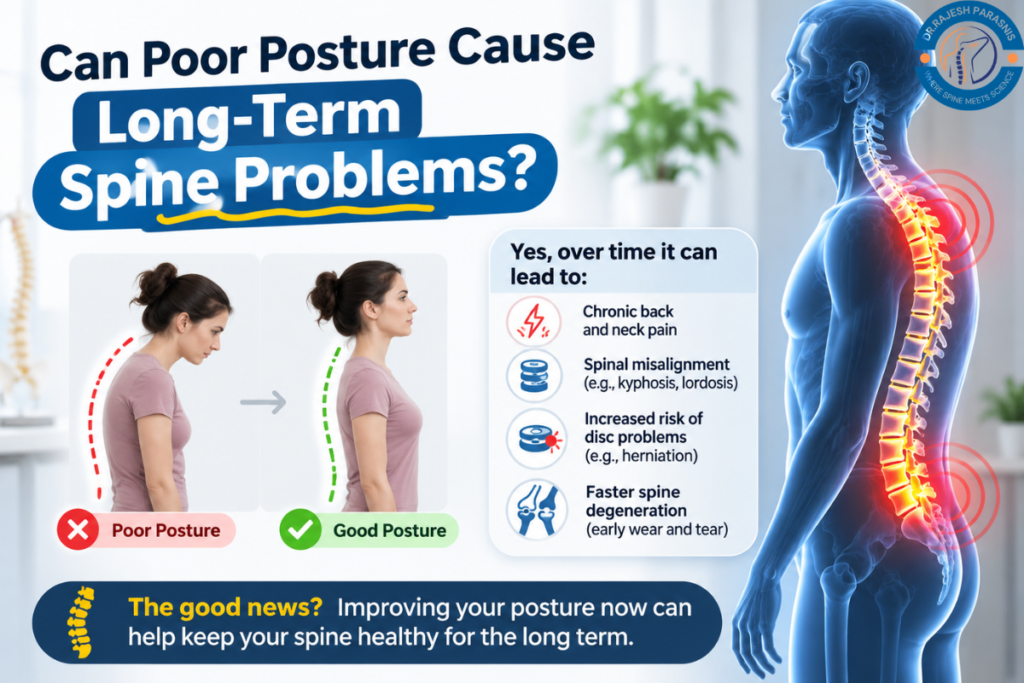
Poor posture and long-term spine problems explained by Dr. Rajesh Parasnis in Pune

Can Poor Posture Cause Long-Term Spine Problems?

Poor posture is commonly blamed for neck pain, back pain, and “spine damage.” But the relationship between posture and long-term spine problems is more nuanced. Sitting or standing in one position for long periods can contribute to muscle fatigue, stiffness, and discomfort. However, posture alone does not automatically mean that permanent spinal damage will occur. In many people, symptoms develop because of a combination of prolonged sitting, reduced physical activity, weak or deconditioned muscles, repetitive strain, age-related changes, and individual lifestyle factors. If you frequently experience neck pain, back pain, stiffness, or discomfort related to prolonged sitting or standing, understanding the role of posture can help you make better decisions about spine health. For patients seeking evaluation of persistent neck or back symptoms in Pune, Dr. Rajesh Parasnis provides assessment and treatment planning based on the individual’s symptoms, examination findings, lifestyle, and imaging when required. Can Poor Posture Really Affect the Spine? Poor or sustained posture can place additional stress on muscles, ligaments, joints, and other structures around the spine. For example, sitting with the head pushed forward for long periods may increase muscular demand around the neck and shoulders. Similarly, prolonged slouching while working at a desk may contribute to stiffness or lower back discomfort. Over time, people may notice: Neck stiffness Upper back discomfort Lower back pain Shoulder tightness Muscle fatigue Headaches related to neck tension Reduced flexibility Discomfort after prolonged sitting These symptoms are often related to prolonged loading and reduced movement rather than posture being the only cause. Does Poor Posture Cause Permanent Spine Damage? Not necessarily. The human spine is designed to move and tolerate different positions. There is no single “perfect posture” that must be maintained throughout the entire day. The bigger concern is often staying in one position for too long. Repeatedly sitting, standing, or bending in the same position without regular movement can increase muscular fatigue and discomfort. In some individuals, this may aggravate an existing spinal condition. However, long-term spine problems such as disc degeneration, arthritis, spinal stenosis, or spondylosis usually have multiple contributing factors, including: Age Genetics Previous injuries Repetitive physical strain Smoking Reduced physical activity Occupational demands Body weight Existing medical conditions Posture may influence symptoms, but it should not automatically be considered the sole cause of spinal degeneration. Why Does Bad Posture Cause Neck Pain? One commonly discussed example is forward head posture. When you spend long periods looking downward at a phone, laptop, or desk, the muscles around the neck and upper back may need to work harder to support the head. This may lead to: Neck pain Shoulder tightness Upper back stiffness Muscle fatigue Difficulty turning the neck comfortably Changing position regularly, improving workstation ergonomics, and strengthening the surrounding muscles can help reduce strain in many people. Can Sitting for Long Hours Cause Back Problems? Prolonged sitting can contribute to lower back discomfort, particularly when combined with low physical activity. People working at a computer may sit for several hours without changing position. This can cause stiffness and fatigue in the lower back, hips, and surrounding muscles. It is useful to remember that the problem is not always simply “sitting incorrectly.” Even sitting in a technically good posture for several hours without moving can become uncomfortable. A more practical approach is to combine: Comfortable sitting posture Regular movement Short standing breaks Walking Stretching Strengthening exercises Appropriate workstation setup Can Poor Posture Cause a Slipped Disc? Poor posture alone does not necessarily cause a slipped or herniated disc. Disc problems can develop due to age-related changes, repetitive loading, lifting injuries, genetic factors, or other mechanical stresses. However, certain repetitive activities or prolonged awkward positions may aggravate existing disc-related symptoms in some people. A slipped disc may cause symptoms such as: Back pain Pain travelling into the leg Numbness or tingling Muscle weakness Sciatica If these symptoms are persistent, a clinical evaluation may be helpful. Can Posture Cause Cervical Spondylosis? Cervical spondylosis refers to age-related degenerative changes in the neck. Poor posture does not directly explain every case of cervical spondylosis. Ageing, genetics, occupation, repetitive strain, and previous injuries may also contribute. However, sustained awkward neck positions may increase discomfort in people who already have cervical degeneration. In such cases, posture modification may help manage symptoms even though it does not reverse the underlying age-related changes. What Is the Best Posture for Spine Health? Rather than trying to maintain one rigid posture all day, aim for a comfortable and supported position that allows regular movement. While sitting: Keep your feet supported Avoid leaning excessively to one side Position your screen around comfortable eye level Keep the keyboard and mouse within easy reach Support the lower back if needed Avoid remaining in the same position for very long periods While standing: Distribute weight comfortably Avoid locking the knees for long periods Change position regularly Avoid prolonged leaning to one side The key principle is simple: Your next posture is often more important than your “perfect” posture. Regular movement matters. How Often Should You Take a Break From Sitting? There is no single schedule that suits everyone, but frequent short movement breaks are generally more practical than sitting continuously for several hours. You can consider: Standing periodically Walking for a few minutes Changing sitting position Stretching the neck and shoulders Moving the hips and lower back Even brief movement can help reduce stiffness and muscular fatigue. Can Exercise Improve Posture? Yes, appropriate exercise can support better posture and movement control. Helpful areas may include: Core strengthening Back strengthening Neck and shoulder exercises Hip mobility Hamstring flexibility Balance training General aerobic activity The most appropriate exercises depend on your symptoms and overall health. If you already have persistent neck pain, back pain, weakness, numbness, or a diagnosed spine condition, it is sensible to seek medical or physiotherapy guidance before beginning an intensive exercise programme. Can Mobile Phone Use Affect Neck Posture? Long periods of looking downward at a phone can contribute to neck discomfort in some people. The problem is

Can Poor Posture Cause Long-Term Spine Problems? Read More »

Back pain with leg weakness warning signs explained by Dr. Rajesh Parasnis, spine specialist in Pune

Back Pain With Leg Weakness: When Is It Urgent?

Back pain is common and often improves with rest, appropriate medication and guided physiotherapy. However, back pain accompanied by weakness in one or both legs should not be treated as routine muscle pain. Leg weakness may indicate that a spinal nerve or, less commonly, a group of nerves is under significant pressure. The urgency depends on how suddenly the weakness appeared, whether it is worsening and whether other warning symptoms are present. Recognising these signs early can help prevent lasting nerve damage. Why Can Back Pain Cause Leg Weakness? The nerves controlling movement and sensation in the legs originate from the lower spine. If a disc, narrowed spinal canal or another spinal condition compresses these nerves, symptoms may travel from the back into the buttock, thigh, calf or foot. Possible symptoms include: Pain radiating down one or both legs Tingling or numbness A feeling of heaviness in the legs Difficulty climbing stairs Trouble lifting the front of the foot Repeated tripping or loss of balance Difficulty standing or walking normally Pain alone does not always indicate serious nerve damage. True muscle weakness, however, requires timely medical evaluation. How Can You Recognise True Leg Weakness? Pain can sometimes make a person avoid putting weight on the affected leg. This may feel like weakness, but it is different from an actual reduction in muscle strength. Signs of true leg weakness may include: The knee unexpectedly giving way Difficulty standing on the toes or heels Inability to lift the foot or toes properly Dragging one foot while walking Needing support to stand from a chair Increasing difficulty walking even short distances Loss of control over a particular leg movement Do not repeatedly test a weak leg or attempt forceful exercises without medical guidance. A clinical neurological examination is needed to determine whether the weakness is related to nerve compression. When Is Back Pain With Leg Weakness an Emergency? Seek immediate emergency medical care if back pain and leg weakness occur with any of the following symptoms. Loss of Bladder or Bowel Control Difficulty starting urination, inability to empty the bladder, urine leakage or loss of bowel control may indicate severe compression of the lower spinal nerves. Numbness Around the Groin or Buttocks Reduced sensation around the genitals, inner thighs, buttocks or the area that would touch a saddle is known as saddle numbness. This is an important neurological warning sign. Sudden or Rapidly Worsening Weakness Weakness that develops suddenly or becomes noticeably worse over hours or days needs urgent assessment. This is particularly important if both legs are affected or walking becomes difficult. Severe Pain Following an Injury Back pain with weakness after a fall, road accident or direct injury may be associated with a spinal fracture, disc injury or nerve damage. Back Pain With Fever or Chills Fever, chills, unexplained illness or recent infection alongside back pain and weakness may indicate a spinal infection. The risk may be higher in people with diabetes, reduced immunity, recent surgery or intravenous drug use. Back Pain With a History of Cancer Persistent or worsening back pain with leg weakness requires prompt assessment in anyone with a current or previous history of cancer, particularly when accompanied by unexplained weight loss or night pain. These symptoms can occasionally be related to cauda equina syndrome, a rare but serious condition caused by severe compression of the nerves at the lower end of the spinal canal. Delayed treatment may lead to permanent weakness or loss of bladder and bowel function. When Should You Arrange an Early Spine Consultation? Not every person with back pain and leg weakness requires emergency surgery. However, a consultation with a spine specialist should be arranged promptly if: Weakness is new, even if it appears mild Symptoms are gradually worsening Pain travels below the knee Numbness or tingling continues Walking distance is decreasing The foot catches on the ground Symptoms interfere with sleep or daily activities Back and leg symptoms are not improving with initial treatment Waiting for severe disability to develop is not advisable. Nerve-related weakness should be assessed before it begins affecting mobility and independence. Common Causes of Back Pain With Leg Weakness Slipped or Herniated Disc A spinal disc can bulge or rupture and press against a nearby nerve root. This may cause sciatica, numbness and weakness along the affected nerve. Lumbar Spinal Stenosis Spinal stenosis is a narrowing of the space available for the nerves. It commonly causes pain, heaviness or weakness during standing and walking. Symptoms may improve temporarily after sitting or bending forward. Spondylolisthesis In this condition, one vertebra slips forward over another. The resulting instability or narrowing may compress spinal nerves and cause back pain with leg symptoms. Spinal Injury A fracture, ligament injury or displaced disc following trauma may affect the stability of the spine and place pressure on the nerves. Less Common Causes Spinal infections, tumours, inflammatory conditions and bleeding around the spinal nerves are less common but important possibilities, especially when warning symptoms are present. How Is the Condition Diagnosed? A spine specialist will first ask when the symptoms began, how quickly they are changing and which activities make them worse. A neurological examination may assess: Muscle strength Reflexes Sensation Walking pattern Balance Ability to walk on the heels and toes An MRI scan may be recommended when nerve compression is suspected. Depending on the clinical situation, X-rays, CT scans, blood tests or nerve studies may also be required. MRI findings should always be interpreted together with the patient’s symptoms and examination. A disc bulge seen on a scan does not automatically mean that surgery is required. Does Leg Weakness Always Require Spine Surgery? No. Treatment depends on the cause, severity and progression of the weakness. Mild and stable symptoms may sometimes be managed with medication, activity modification and supervised physiotherapy. Surgery may be considered when: Weakness is significant or progressing Severe nerve compression is present Walking is becoming increasingly difficult Bladder, bowel or saddle sensation is affected Symptoms do not improve with appropriate

Back Pain With Leg Weakness: When Is It Urgent? Read More »

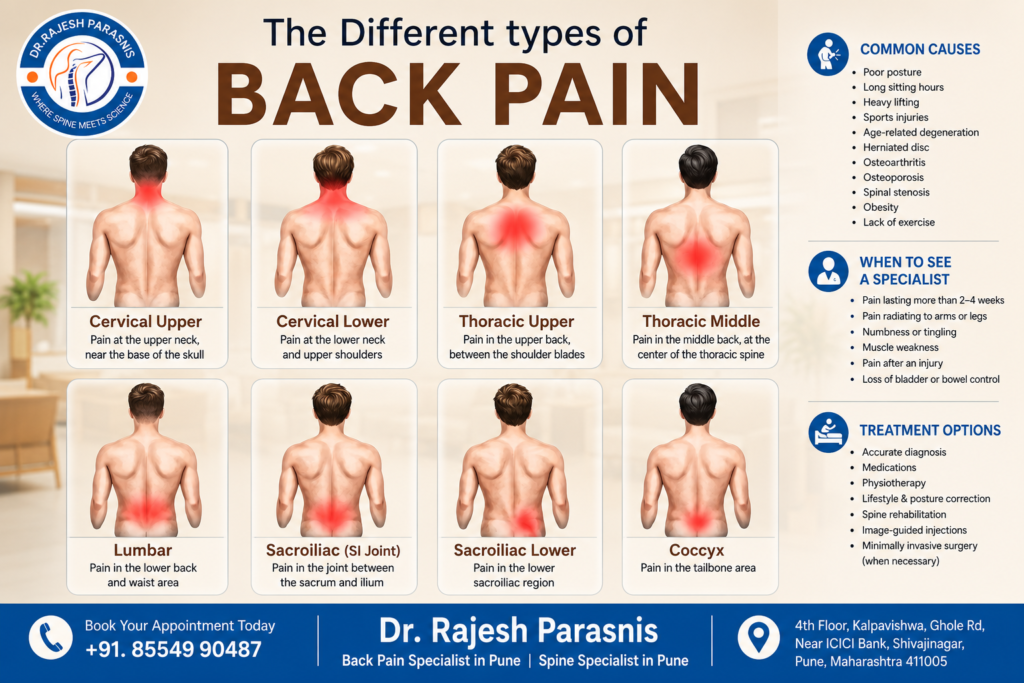
Different Types of Back Pain – Back Pain Treatment in Pune by Dr. Rajesh Parasnis

The Different Types of Back Pain: Understanding the Cause of Your Pain

Back pain is one of the most common health problems affecting people of all ages. Whether it’s a dull ache after a long day at work or a sharp pain that radiates down your legs, back pain should never be ignored. The location of your pain often provides important clues about the underlying condition and helps determine the most effective treatment. Different regions of the spine are associated with different causes and symptoms, making an accurate diagnosis essential for successful recovery. At Dr. Rajesh Parasnis Spine Clinic, Pune, we specialize in diagnosing and treating all types of spinal disorders using advanced, evidence-based, and minimally invasive techniques. Understanding the Different Types of Back Pain 1. Cervical Upper Pain (Upper Neck Pain) Pain at the upper part of the neck, near the base of the skull, is commonly associated with: Poor posture Muscle strain Tension headaches Cervical spondylosis Symptoms: Neck stiffness Headaches Difficulty turning the head Pain radiating to the shoulders 2. Cervical Lower Pain (Lower Neck & Shoulder Pain) Pain in the lower neck and upper shoulder region is often caused by: Cervical disc problems Pinched nerves Poor workstation ergonomics Long hours of mobile or computer use Symptoms: Neck pain Shoulder discomfort Tingling or numbness in the arms Weakness in the hands 3. Thoracic Upper Pain (Upper Back Pain) Pain between the shoulder blades may occur due to: Poor posture Muscle strain Sedentary lifestyle Spinal joint dysfunction Although less common, persistent upper back pain should be evaluated to rule out spinal conditions. 4. Thoracic Middle Pain (Mid Back Pain) Pain in the middle of the back can result from: Muscle fatigue Degenerative spine changes Compression fractures Scoliosis Persistent pain requires medical assessment to identify the underlying cause. 5. Lumbar Pain (Lower Back Pain) Lower back pain is the most common type of back pain and may develop because of: Muscle strain Degenerative disc disease Herniated (slipped) disc Lumbar spondylosis Spinal stenosis Symptoms include: Lower back stiffness Difficulty bending Pain while sitting or standing Pain radiating into the legs (Sciatica) 6. Sacroiliac (SI Joint) Pain The sacroiliac joints connect the spine to the pelvis. Pain in this region may occur because of: SI joint dysfunction Pregnancy Arthritis Injury Inflammation Patients often experience pain while climbing stairs, walking, or standing for long periods. 7. Sacroiliac Lower Pain Pain lower in the pelvis or buttock region may indicate: SI joint instability Ligament strain Pelvic imbalance Pain often worsens with prolonged standing or changing positions. 8. Coccyx Pain (Tailbone Pain) Pain around the tailbone can occur after: Falls Childbirth Prolonged sitting Trauma Patients usually feel discomfort while sitting or getting up from a chair. Common Causes of Back Pain Back pain can develop due to several reasons, including: Poor posture Long sitting hours Heavy lifting Sports injuries Age-related degeneration Herniated disc Osteoarthritis Osteoporosis Spinal stenosis Obesity Lack of exercise Identifying the exact cause is essential before beginning treatment. When Should You Consult a Spine Specialist? Seek medical attention if your back pain: Lasts longer than 2–4 weeks Radiates to the legs or arms Causes numbness or tingling Leads to muscle weakness Worsens while walking Occurs after an injury Affects bowel or bladder control Interferes with daily activities or sleep These symptoms may indicate nerve compression or other spinal disorders that require specialist evaluation. Back Pain Treatment in Pune At Dr. Rajesh Parasnis Spine Clinic, treatment is personalized based on the cause of your pain. Options may include: Comprehensive spine evaluation Digital X-rays and MRI when needed Medications Physiotherapy Lifestyle and posture correction Spine rehabilitation Image-guided injections Minimally invasive spine surgery (only when necessary) The goal is always to relieve pain, restore movement, and help patients return to an active lifestyle as quickly as possible. Tips to Prevent Back Pain Maintain correct posture while sitting and standing. Exercise regularly to strengthen your back and core muscles. Lift heavy objects correctly using your legs. Avoid prolonged sitting. Maintain a healthy body weight. Use an ergonomic workstation. Stretch regularly during long working hours. Why Choose Dr. Rajesh Parasnis? Dr. Rajesh Parasnis is a renowned Back Pain Specialist in Pune and Spine Specialist in Pune, experienced in treating simple to complex spinal disorders with advanced, patient-focused care. His approach emphasizes accurate diagnosis, conservative treatment whenever possible, and minimally invasive spine surgery when required. Conclusion Back pain is not a disease—it’s a symptom that can arise from many different conditions. Understanding where your pain is located can help identify its cause and guide the right treatment. Early diagnosis and expert spine care can prevent complications and improve your quality of life. If you’re experiencing persistent neck, upper back, or lower back pain, consult Dr. Rajesh Parasnis, a trusted Back Pain Specialist in Pune, for expert evaluation and personalized treatment.

The Different Types of Back Pain: Understanding the Cause of Your Pain Read More »