

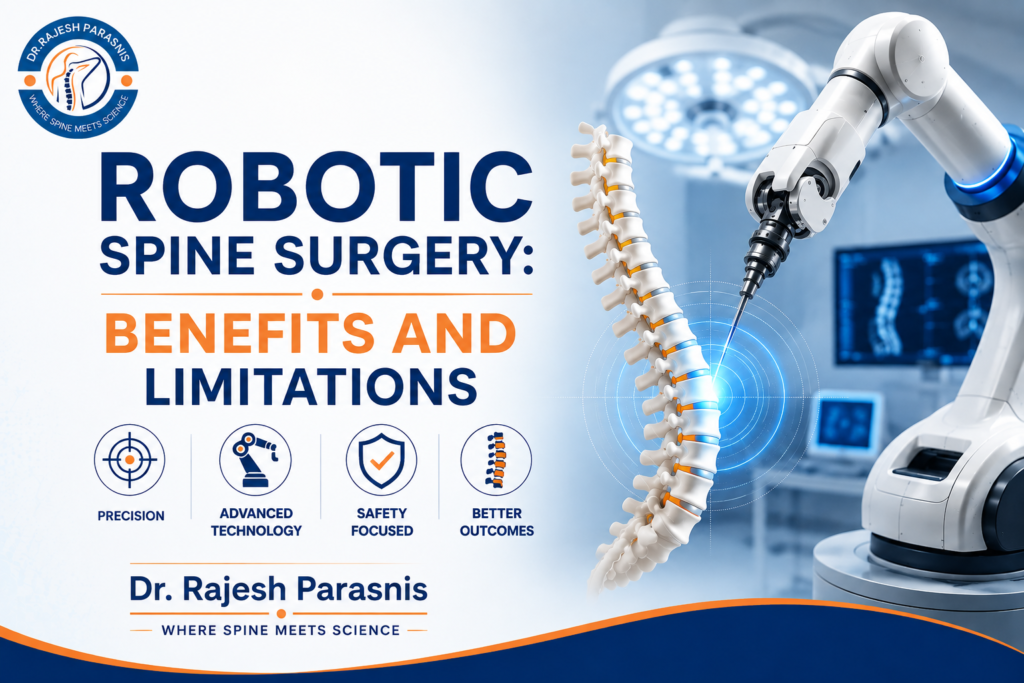
Advances in medical technology have introduced new tools that can assist surgeons during complex procedures. Robotic spine surgery is one such development that uses advanced computer-based planning and guidance systems to support the surgeon during selected spine operations.
However, it is important to understand that robotic technology does not replace the surgeon. The surgeon remains in control of the procedure and uses the technology as an additional tool when it is considered appropriate.
For patients exploring treatment options for certain spine conditions, understanding both the potential benefits and limitations of robotic spine surgery can help them have a more informed discussion with their spine specialist. Dr. Rajesh Parasnis provides comprehensive evaluation and guidance based on the patient’s individual condition, symptoms, imaging findings and overall treatment needs.
What Is Robotic Spine Surgery?
Robotic spine surgery involves the use of specialised technology that may help the surgical team plan and guide specific parts of a spine procedure. Depending on the procedure and technology used, robotic guidance can assist with planning the placement of surgical instruments or implants.
Before surgery, imaging studies may be used to create a detailed surgical plan. During the procedure, the robotic system can provide guidance designed to help the surgeon follow the planned approach.
It is important to remember that a robotic system is not performing surgery independently. A qualified spine surgeon makes the clinical decisions and performs the operation.
Patients considering spine surgery should discuss whether robotic assistance is suitable for their particular condition, as not every spine problem requires or benefits from robotic technology.
Potential Benefits of Robotic Spine Surgery
Robotic technology may offer several potential advantages in appropriately selected procedures.
1. May Assist With Surgical Planning
Detailed pre-operative planning can help the surgeon prepare for the procedure based on the patient’s individual spinal anatomy. This can be particularly valuable in selected complex cases.
2. May Support Precision and Guidance
Robotic and navigation technology can provide additional guidance during certain stages of surgery, such as the placement of specific spinal implants. The potential benefit depends on the type of surgery, the technology available and the individual patient’s anatomy.
3. May Be Useful in Selected Complex Procedures
Some spinal conditions and revision procedures can involve complex anatomy. Advanced planning and guidance technology may be considered as an additional tool in selected cases.
4. May Support Minimally Invasive Surgical Approaches
In some appropriate cases, robotic guidance may be used alongside minimally invasive spine surgery techniques. However, the surgical approach depends on the condition being treated and the surgeon’s clinical assessment.
5. Improved Visualisation and Planning
Technology-assisted surgery can provide the surgical team with additional anatomical information and real-time guidance, depending on the system being used.
It is important to note that these are potential benefits and do not guarantee a specific surgical outcome for every patient.
Limitations of Robotic Spine Surgery
While robotic technology has expanded the tools available to spine surgeons, it also has important limitations.
1. It Is Not Suitable for Every Patient
Not all spinal conditions require robotic spine surgery. The decision depends on several factors, including the diagnosis, severity of the condition, spinal anatomy, previous surgeries and the goals of treatment.
In many cases, non-surgical treatment or conventional surgical techniques may be more appropriate.
2. Technology Does Not Replace Surgical Expertise
The success and safety of a procedure depend on many factors, including the surgeon’s training, experience, clinical judgement and careful patient selection. A robotic system is an assisting technology and does not replace the expertise of the surgeon.
3. Surgery Still Carries Risks
Using robotic assistance does not eliminate the general risks associated with spine surgery. Depending on the procedure, potential risks may include infection, bleeding, nerve-related complications, implant-related problems, persistent symptoms or the need for further treatment.
The risks vary from patient to patient and should be discussed with the treating spine surgeon in pune.
4. Not Every Procedure Requires Robotic Technology
The availability of advanced technology does not mean it is automatically the best option for every surgery. The most suitable treatment should be chosen based on medical need rather than technology alone.
5. Cost and Availability May Vary
Robotic systems may not be available at every hospital or surgical centre. Costs and insurance coverage can also vary depending on the healthcare facility, procedure and individual circumstances.
Is Robotic Spine Surgery Right for You?
The answer depends on your individual condition. A proper evaluation is essential before deciding whether any type of spine surgery is needed and, if surgery is recommended, which surgical approach may be suitable.
A spine specialist may consider factors such as:
- Your specific spinal diagnosis
- Severity and duration of symptoms
- Findings from MRI, CT scans or other investigations
- Presence of nerve compression or spinal instability
- Response to non-surgical treatment
- Previous spine surgery
- Overall health and medical history
- The expected goals and limitations of treatment
A thorough consultation allows patients to understand the available options and make an informed decision.
Robotic Spine Surgery Is a Tool, Not a Replacement for Good Clinical Judgement
One of the most important things for patients to understand is that technology alone does not determine the success of treatment. The right diagnosis, appropriate patient selection, careful surgical planning and experienced clinical judgement remain essential.
For some patients, robotic guidance may be a useful part of the surgical plan. For others, a different approach may be more suitable. The best treatment is the one that addresses the patient’s condition appropriately while considering individual risks and expected benefits.
Dr. Rajesh Parasnis offers personalised assessment for patients with various spine conditions, helping them understand suitable treatment options based on their individual clinical needs.
When Should You Consult a Spine Specialist?
Consider consulting a qualified spine specialist in pune if you experience persistent or worsening symptoms such as:
- Ongoing neck or back pain that does not improve
- Pain radiating into the arms or legs
- Numbness or tingling
- Muscle weakness
- Difficulty walking or maintaining balance
- Symptoms that continue despite appropriate conservative treatment
Sudden or severe weakness, loss of bladder or bowel control, or other serious neurological symptoms may require urgent medical attention.
Conclusion
Robotic spine surgery represents an important advancement in technology-assisted surgical care. In selected procedures, it may support detailed planning and surgical guidance. However, it also has limitations and is not necessary or appropriate for every patient.
The decision about whether robotic assistance should be used depends on the specific spinal condition, the type of procedure and an individual clinical assessment. Patients should have a detailed discussion with their spine specialist about the potential benefits, limitations, alternatives and risks before making a treatment decision.
For personalised guidance regarding robotic spine surgery, spine surgery, back pain treatment, slip disc treatment, sciatica treatment and other spine conditions, consult Dr. Rajesh Parasnis for an appropriate evaluation and discussion of available treatment options.
Medical Disclaimer: This article is for general educational purposes only and should not be considered a substitute for professional medical advice, diagnosis or treatment. Treatment decisions should always be based on an individual consultation with a qualified healthcare professional.