
Dr. Rajesh Parasnis

Herniated Disc Treatment in Pune

Difficulty walking and balance problems related to spine conditions, Dr. Rajesh Parasnis Pune

Difficulty Walking and Balance Problems: Could Your Spine Be the Cause?

Difficulty walking, feeling unsteady, or frequently losing balance can have many possible causes. Some are related to the inner ear, muscles, joints, medications, or neurological conditions. In certain patients, however, the spine may also play an important role. When the spinal cord or nerves are compressed, signals between the brain and the legs may not travel normally. This can affect strength, coordination, sensation, and balance. Recognizing these symptoms early is important, especially when they are getting worse or are accompanied by weakness, numbness, or changes in hand function. For patients looking for evaluation of walking difficulty, balance issues, neck problems, or spine-related nerve compression in Pune, Dr. Rajesh Parasnis provides assessment and treatment planning based on symptoms, clinical examination, and imaging findings. Can Spine Problems Cause Difficulty Walking? Yes, some spine conditions can contribute to walking difficulty and balance problems. The spine protects the spinal cord and provides pathways for nerves that help control movement and sensation. If the spinal cord or nerves become compressed, patients may notice changes such as: Unsteady walking Frequent loss of balance A heavy or weak feeling in the legs Numbness or tingling in the hands or feet Difficulty climbing stairs Trouble walking in a straight line Needing support while walking Reduced coordination Stiffness or weakness in the legs These symptoms do not automatically mean that a spine problem is the cause, but they should not be ignored if they are persistent or progressive. Which Spine Conditions Can Affect Balance and Walking? Several spinal disorders can potentially affect mobility. Cervical Myelopathy One important cause is cervical myelopathy, which occurs when the spinal cord in the neck becomes compressed. Possible causes include age-related wear and tear, disc problems, thickening of spinal ligaments, bone spurs, or narrowing of the spinal canal. Patients may experience: Difficulty balancing while walking Stiffness in the legs Weakness Numbness in the hands Difficulty with fine hand movements Problems buttoning clothes or writing A tendency to drop objects Because cervical myelopathy can sometimes progress over time, timely evaluation is important. Cervical Spinal Stenosis Cervical spinal stenosis means narrowing of the spinal canal in the neck. If this narrowing begins to compress the spinal cord, symptoms can include imbalance, gait disturbance, hand clumsiness, and weakness in the arms or legs. Lumbar Spinal Stenosis The lower back may also affect walking. In lumbar spinal stenosis, the nerves in the lower spine can become compressed. This may cause pain, heaviness, numbness, or weakness in the legs, particularly while standing or walking. Some patients find that they can walk only a certain distance before symptoms begin and may feel better after sitting down or bending slightly forward. Slipped Disc or Disc Herniation A slipped or herniated disc may press on spinal nerves. Depending on the location and severity of compression, this can cause: Leg pain Weakness Numbness Difficulty walking normally Altered foot control Not every disc problem requires surgery. Treatment depends on the clinical findings and severity of symptoms. Spinal Cord Compression Any condition that significantly compresses the spinal cord may affect coordination and balance. This can result from degenerative changes, trauma, tumours, infections, deformity, or other less common causes. Accurate diagnosis is therefore essential before deciding on treatment. How Can You Tell Whether Balance Problems Are Coming From the Spine? Balance problems can arise from several systems in the body, so symptoms alone cannot confirm the cause. A spine-related cause may be considered more likely when balance problems occur together with symptoms such as: Neck pain or stiffness Back pain Numbness or tingling Weakness in the arms or legs Hand clumsiness Difficulty using buttons or writing Electric-shock-like sensations with neck movement Changes in walking pattern Leg stiffness Progressive worsening over time A proper examination helps distinguish spine-related symptoms from problems involving the brain, inner ear, joints, muscles, or other causes. Why Is Early Evaluation Important? Walking and balance problems can increase the risk of falls and injuries. More importantly, if the symptoms are caused by spinal cord compression, delay in diagnosis may allow neurological symptoms to progress in some patients. Early evaluation does not automatically mean surgery will be needed. It means identifying the cause and understanding whether observation, physiotherapy, medicines, rehabilitation, or surgical treatment may be appropriate. How Is the Cause Diagnosed? A spine specialist may begin by discussing: When the symptoms started Whether they are getting worse How far you can walk comfortably Whether there is pain, weakness, or numbness Whether your hands are also affected Whether you have fallen recently Previous spine problems or injuries A neurological and musculoskeletal examination may then assess strength, reflexes, sensation, coordination, gait, and balance. Depending on the findings, investigations may include: X-rays X-rays can help assess spinal alignment, degeneration, deformity, or instability. MRI MRI is often particularly useful because it can show the spinal cord, discs, nerves, ligaments, and areas of compression. CT Scan CT may be helpful when more detailed information about bone structures is required. The correct investigation depends on the patient’s symptoms and examination findings. Does Difficulty Walking Always Mean Spine Surgery Is Needed? No. Many people with walking or balance problems do not need surgery. Treatment depends entirely on the underlying diagnosis. Non-surgical options may include: Medicines Physiotherapy Strength and balance training Activity modification Posture correction Treatment of osteoporosis or joint problems Management of other neurological or medical causes However, when there is significant or progressive spinal cord compression, surgery may sometimes be considered to prevent further neurological deterioration and relieve pressure on the spinal cord. The decision is individualized. When Might Spine Surgery Be Considered? Surgery may be discussed when there is evidence of significant nerve or spinal cord compression associated with symptoms such as: Progressive weakness Increasing walking difficulty Worsening balance Significant hand clumsiness Neurological deterioration Severe spinal stenosis Structural instability Symptoms not responding to appropriate conservative care The type of surgery depends on the location and cause of compression. Can Minimally Invasive Spine Surgery Help? In selected patients, minimally invasive spine surgery or other advanced surgical approaches may be

Difficulty Walking and Balance Problems: Could Your Spine Be the Cause? Read More »
When a slipped disc requires surgery - Slipped disc surgery in Pune - Dr. Rajesh Parasnis

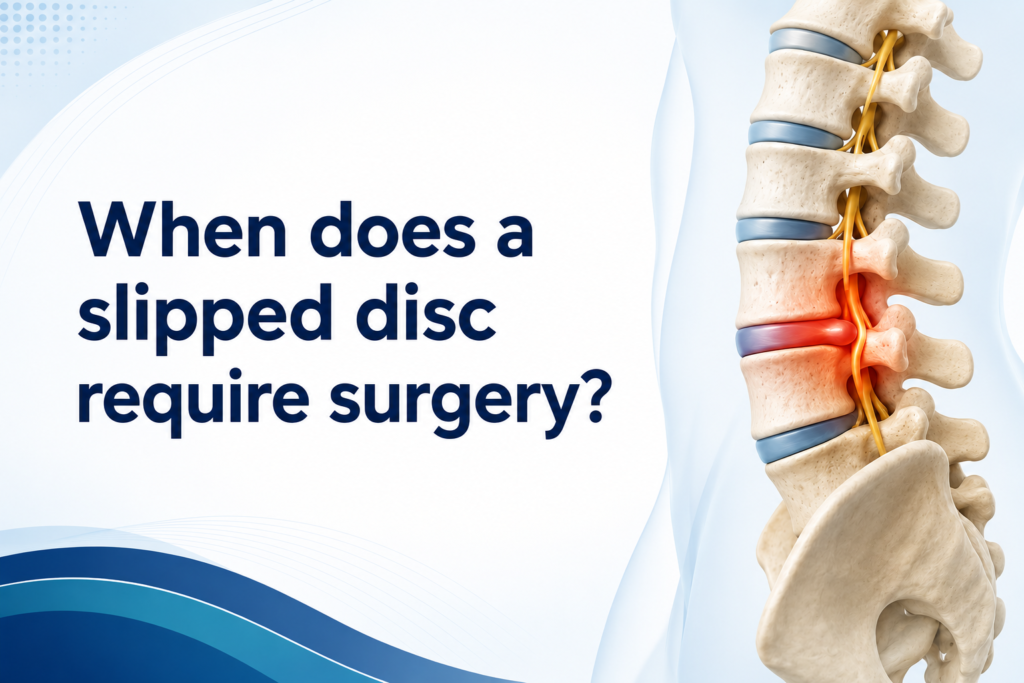
When Does a Slipped Disc Require Surgery?

A slipped disc can cause back or neck pain, but the symptom that often worries patients most is pain travelling into an arm or leg. Some people also develop tingling, numbness or muscle weakness because the displaced disc material is pressing on a nearby nerve. This naturally raises an important question: does every slipped disc need an operation? The short answer is no. Most patients improve with appropriate non surgical care. However, surgery may become necessary when nerve compression causes serious neurological symptoms or when persistent pain and loss of function do not improve despite a structured course of treatment. If you are considering slipped disc treatment in Pune, understanding why surgery is recommended in some cases and avoided in others can help you make a more informed decision with your specialist. What Is a Slipped Disc? The spine is made up of bones called vertebrae, with soft discs between them. Each disc acts like a cushion and helps the spine move smoothly. A slipped disc, also called a herniated or prolapsed disc, occurs when the softer inner material pushes through a weakened area in the disc’s outer layer. The disc itself does not literally slip out of place. Symptoms develop when the bulging or herniated portion irritates or compresses a spinal nerve. A slipped disc in the lower back may cause sciatica, with pain extending through the buttock and leg. A disc problem in the neck may cause pain, tingling, numbness or weakness extending into the shoulder, arm or hand. Does Every Slipped Disc Need Surgery? No. According to the NHS, surgery is not usually required for a slipped disc. Many patients improve through a combination of guided activity, medicines, physiotherapy and time. Initial treatment may include pain relieving or anti inflammatory medicines when medically appropriate, modification of activities that aggravate symptoms, and a supervised exercise or physiotherapy programme. Selected patients may also be advised an injection to reduce inflammation around an irritated nerve. Prolonged bed rest is generally not the goal. A doctor may instead recommend safe, gradual movement based on the patient’s symptoms and neurological examination. The exact plan should be personalised, especially when pain is severe or weakness is present. When Does a Slipped Disc Require Surgery? Surgery is considered according to the severity, duration and progression of symptoms. The MRI finding alone does not decide the treatment. The scan should match the patient’s pain pattern, examination findings and functional difficulties. 1. Bladder or Bowel Problems Develop A large lumbar disc herniation can occasionally compress the bundle of nerves at the bottom of the spinal canal. This serious condition is known as cauda equina syndrome. Warning signs include difficulty starting urination, inability to pass urine, loss of bladder or bowel control, and numbness around the inner thighs, genitals or buttocks. The American Academy of Orthopaedic Surgeons advises immediate medical attention for these symptoms because early treatment is important to reduce the risk of permanent problems. This is an emergency and should not wait for a routine clinic appointment. 2. Muscle Weakness Is New or Getting Worse Pain can be distressing, but progressive loss of strength is especially concerning. A patient may begin dragging a foot, repeatedly tripping, struggling to stand on the toes or heel, losing grip strength, or finding routine hand movements difficult. Worsening weakness can mean that the compressed nerve is losing function. In this situation, waiting too long may reduce the chance of full nerve recovery. A specialist may recommend earlier surgery after examining the patient and reviewing the imaging. 3. Severe Nerve Pain Continues Despite Treatment Surgery may be discussed when radiating arm or leg pain remains severe and disabling despite an adequate trial of non surgical care. The person may be unable to sleep, sit, walk, work or complete normal daily activities even after following the recommended treatment plan. There is no single waiting period that applies to every patient. The duration of conservative treatment depends on pain severity, neurological findings and the effect on daily life. Emergency symptoms and progressive weakness should not be managed by simply waiting for a fixed number of weeks. 4. Symptoms and MRI Findings Clearly Match An MRI can identify the level and extent of a disc herniation, but disc changes can also appear in people who have no symptoms. Therefore, a surgeon looks for a clear relationship between the compressed nerve seen on the scan and the patient’s symptoms. For example, the location of leg pain, altered sensation, reduced reflexes and weakness should correspond to the nerve affected on MRI. Surgery is less likely to help when the scan finding does not explain the clinical problem. 5. Quality of Life Remains Significantly Limited Persistent pain may prevent a person from walking comfortably, working, driving, exercising or caring for family. When properly followed non surgical treatment has not restored reasonable function, the potential benefits and risks of surgery can be discussed. The decision should be shared. It should consider the patient’s overall health, occupation, expected benefit, surgical risk and personal goals rather than relying on the scan alone. Which Surgery Is Commonly Used for a Slipped Disc? For a single herniated disc in the lower back, microdiscectomy is a commonly used procedure. The surgeon removes the disc fragment pressing on the nerve while preserving as much healthy tissue as possible. The AAOS also describes endoscopic discectomy as a minimally invasive option for selected patients. Other procedures may be considered depending on whether the problem is in the neck or lower back, the number of levels involved, spinal stability and any associated narrowing of the spinal canal. Fusion is not automatically required for every slipped disc. The most suitable operation can only be selected after a clinical examination and review of the imaging. What Can Slipped Disc Surgery Improve? The main purpose of disc surgery is to relieve pressure on a nerve. It is generally intended to improve radiating nerve pain and prevent or address neurological deterioration. The response of back pain alone may be

When Does a Slipped Disc Require Surgery? Read More »

Slip Disc (Herniated Disc) Treatment in Pune by Dr. Rajesh Parasnis, Spine Specialist offering advanced diagnosis, non-surgical care, and minimally invasive spine surgery.

Herniated Disc | Get Back on Track – Expert Spine Care by Dr. Rajesh Parasnis

A slip disc, also known as a herniated disc, is one of the most common causes of back pain and sciatica. It can make everyday activities such as sitting, walking, bending, or lifting objects painful and difficult. Early diagnosis and the right treatment can help you recover faster and prevent long-term complications. If you’re looking for Slip Disc Treatment in Pune or Herniated Disc Treatment in Pune, Dr. Rajesh Parasnis, an experienced Spine Specialist in Pune, provides comprehensive diagnosis and advanced treatment options tailored to each patient’s condition. What is a Herniated Disc? The spine consists of vertebrae separated by soft, cushion-like discs that absorb shock. When the outer layer of a disc tears or weakens, the inner gel-like material bulges or leaks out. This condition is known as a herniated disc or slip disc. The protruding disc can compress nearby nerves, leading to pain, numbness, weakness, and reduced mobility. Common Symptoms of a Slip Disc Symptoms vary depending on the location and severity of the disc herniation. Common signs include: Persistent lower back or neck pain Pain radiating to the leg (sciatica) or arm Numbness or tingling sensation Muscle weakness Difficulty standing or walking for long periods Increased pain while coughing, sneezing, or bending Ignoring these symptoms may worsen nerve compression and delay recovery. Causes and Risk Factors Several factors can contribute to a herniated disc: Age-related disc degeneration Improper lifting techniques Repetitive bending or twisting Obesity Sedentary lifestyle Sudden injury or trauma Poor posture Smoking Maintaining spinal health through exercise and proper ergonomics can significantly reduce the risk. Diagnosis by Dr. Rajesh Parasnis An accurate diagnosis is essential for effective treatment. Dr. Rajesh Parasnis performs: Detailed medical history Physical and neurological examination MRI scan (when required) X-rays to assess spinal alignment Advanced imaging for complex spine conditions A personalized treatment plan is then designed based on the severity of the disc problem. Advanced Slip Disc Treatment in Pune Most patients recover without surgery when treated early. Non-Surgical Treatment Pain management Anti-inflammatory medications Physiotherapy Core strengthening exercises Lifestyle modification Activity and posture correction Guided rehabilitation Minimally Invasive Spine Surgery If conservative treatment fails or significant nerve compression is present, minimally invasive spine surgery may be recommended. Benefits include: Smaller incisions Less muscle damage Reduced pain Shorter hospital stay Faster recovery Earlier return to daily activities Why Choose Dr. Rajesh Parasnis? Dr. Rajesh Parasnis is a trusted Spine Specialist in Pune known for evidence-based treatment and patient-focused care. Highlights Extensive experience in spine disorders Personalized treatment plans Advanced minimally invasive techniques Comprehensive rehabilitation guidance Focus on long-term pain relief and improved mobility When Should You Visit a Spine Specialist? Consult a spine specialist if you experience: Back pain lasting more than two weeks Pain spreading to the legs or arms Tingling or numbness Muscle weakness Difficulty walking Loss of bladder or bowel control (medical emergency) Early treatment improves outcomes and reduces the likelihood of surgery. Book Your Spine Consultation Living with a herniated disc doesn’t have to limit your lifestyle. With timely diagnosis and expert care, most patients experience significant pain relief and regain normal function. If you’re searching for the best Slip Disc Treatment in Pune or Herniated Disc Treatment in Pune, schedule a consultation with Dr. Rajesh Parasnis, Spine Specialist in Pune, for expert evaluation and advanced spine care.

Herniated Disc | Get Back on Track – Expert Spine Care by Dr. Rajesh Parasnis Read More »