

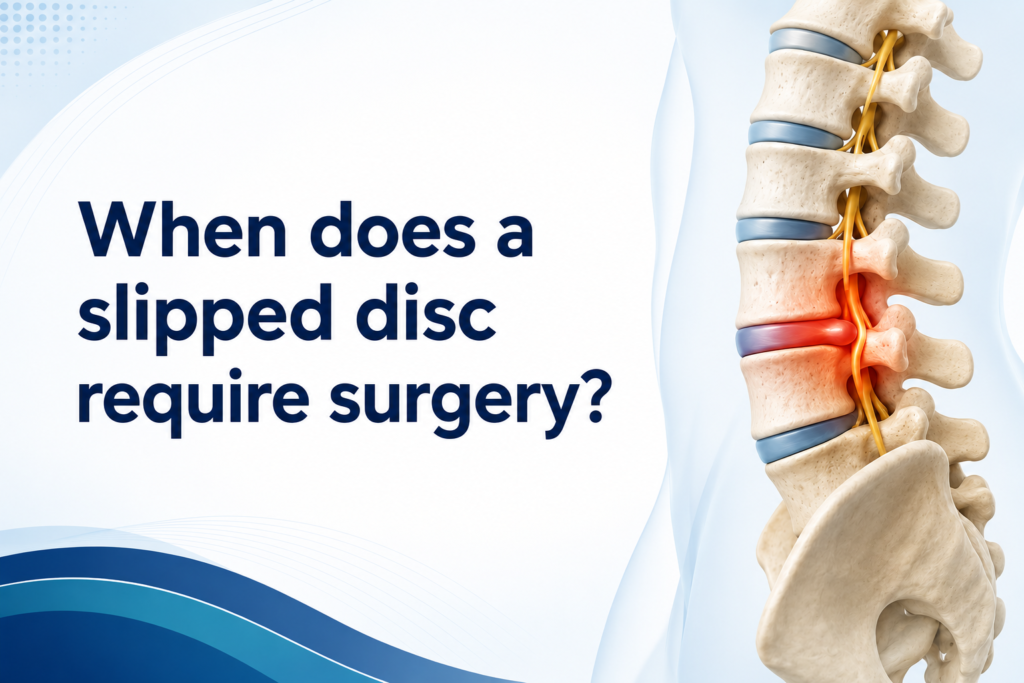
A slipped disc can cause back or neck pain, but the symptom that often worries patients most is pain travelling into an arm or leg. Some people also develop tingling, numbness or muscle weakness because the displaced disc material is pressing on a nearby nerve. This naturally raises an important question: does every slipped disc need an operation?
The short answer is no. Most patients improve with appropriate non surgical care. However, surgery may become necessary when nerve compression causes serious neurological symptoms or when persistent pain and loss of function do not improve despite a structured course of treatment.
If you are considering slipped disc treatment in Pune, understanding why surgery is recommended in some cases and avoided in others can help you make a more informed decision with your specialist.
What Is a Slipped Disc?
The spine is made up of bones called vertebrae, with soft discs between them. Each disc acts like a cushion and helps the spine move smoothly. A slipped disc, also called a herniated or prolapsed disc, occurs when the softer inner material pushes through a weakened area in the disc’s outer layer.
The disc itself does not literally slip out of place. Symptoms develop when the bulging or herniated portion irritates or compresses a spinal nerve. A slipped disc in the lower back may cause sciatica, with pain extending through the buttock and leg. A disc problem in the neck may cause pain, tingling, numbness or weakness extending into the shoulder, arm or hand.
Does Every Slipped Disc Need Surgery?
No. According to the NHS, surgery is not usually required for a slipped disc. Many patients improve through a combination of guided activity, medicines, physiotherapy and time.
Initial treatment may include pain relieving or anti inflammatory medicines when medically appropriate, modification of activities that aggravate symptoms, and a supervised exercise or physiotherapy programme. Selected patients may also be advised an injection to reduce inflammation around an irritated nerve.
Prolonged bed rest is generally not the goal. A doctor may instead recommend safe, gradual movement based on the patient’s symptoms and neurological examination. The exact plan should be personalised, especially when pain is severe or weakness is present.
When Does a Slipped Disc Require Surgery?
Surgery is considered according to the severity, duration and progression of symptoms. The MRI finding alone does not decide the treatment. The scan should match the patient’s pain pattern, examination findings and functional difficulties.
1. Bladder or Bowel Problems Develop
A large lumbar disc herniation can occasionally compress the bundle of nerves at the bottom of the spinal canal. This serious condition is known as cauda equina syndrome.
Warning signs include difficulty starting urination, inability to pass urine, loss of bladder or bowel control, and numbness around the inner thighs, genitals or buttocks. The American Academy of Orthopaedic Surgeons advises immediate medical attention for these symptoms because early treatment is important to reduce the risk of permanent problems.
This is an emergency and should not wait for a routine clinic appointment.
2. Muscle Weakness Is New or Getting Worse
Pain can be distressing, but progressive loss of strength is especially concerning. A patient may begin dragging a foot, repeatedly tripping, struggling to stand on the toes or heel, losing grip strength, or finding routine hand movements difficult.
Worsening weakness can mean that the compressed nerve is losing function. In this situation, waiting too long may reduce the chance of full nerve recovery. A specialist may recommend earlier surgery after examining the patient and reviewing the imaging.
3. Severe Nerve Pain Continues Despite Treatment
Surgery may be discussed when radiating arm or leg pain remains severe and disabling despite an adequate trial of non surgical care. The person may be unable to sleep, sit, walk, work or complete normal daily activities even after following the recommended treatment plan.
There is no single waiting period that applies to every patient. The duration of conservative treatment depends on pain severity, neurological findings and the effect on daily life. Emergency symptoms and progressive weakness should not be managed by simply waiting for a fixed number of weeks.
4. Symptoms and MRI Findings Clearly Match
An MRI can identify the level and extent of a disc herniation, but disc changes can also appear in people who have no symptoms. Therefore, a surgeon looks for a clear relationship between the compressed nerve seen on the scan and the patient’s symptoms.
For example, the location of leg pain, altered sensation, reduced reflexes and weakness should correspond to the nerve affected on MRI. Surgery is less likely to help when the scan finding does not explain the clinical problem.
5. Quality of Life Remains Significantly Limited
Persistent pain may prevent a person from walking comfortably, working, driving, exercising or caring for family. When properly followed non surgical treatment has not restored reasonable function, the potential benefits and risks of surgery can be discussed.
The decision should be shared. It should consider the patient’s overall health, occupation, expected benefit, surgical risk and personal goals rather than relying on the scan alone.
Which Surgery Is Commonly Used for a Slipped Disc?
For a single herniated disc in the lower back, microdiscectomy is a commonly used procedure. The surgeon removes the disc fragment pressing on the nerve while preserving as much healthy tissue as possible. The AAOS also describes endoscopic discectomy as a minimally invasive option for selected patients.
Other procedures may be considered depending on whether the problem is in the neck or lower back, the number of levels involved, spinal stability and any associated narrowing of the spinal canal. Fusion is not automatically required for every slipped disc. The most suitable operation can only be selected after a clinical examination and review of the imaging.
What Can Slipped Disc Surgery Improve?
The main purpose of disc surgery is to relieve pressure on a nerve. It is generally intended to improve radiating nerve pain and prevent or address neurological deterioration. The response of back pain alone may be less predictable, particularly when pain has several causes.
Recovery also varies. The duration of nerve compression, severity of weakness, general health, smoking, diabetes, rehabilitation and the type of work a person performs can all influence progress. Surgery removes the current compression, but long term spine care, safe lifting habits, weight management where appropriate and rehabilitation remain important.
Do Not Ignore These Red Flags
Seek urgent medical care if a suspected slipped disc is accompanied by:
- New loss of bladder or bowel control
- Difficulty passing urine
- Numbness around the groin, genitals, buttocks or inner thighs
- Rapidly worsening weakness in an arm or leg
- Sudden difficulty walking or repeated falls
These symptoms require prompt assessment and should not be treated only with home remedies, massage or pain medicines.
Making the Right Decision About Slipped Disc Surgery in Pune
The need for surgery is determined by symptoms, nerve function, examination findings, MRI correlation and response to appropriate non surgical treatment. Pain alone does not always mean an operation is necessary, while progressive neurological symptoms may make timely intervention important.
For an individual assessment of slipped disc treatment in Pune, consult Dr. Rajesh Parasnis. After evaluating your symptoms, strength, reflexes and imaging, he can explain whether continued conservative care or slipped disc surgery in Pune is the more suitable option for your condition.
Frequently Asked Questions
Can a slipped disc heal without surgery?
Many slipped discs improve without surgery. Treatment may include guided activity, medicines, physiotherapy and, in selected cases, an injection. Regular reassessment is important if numbness or weakness is present.
How long should I wait before considering surgery?
There is no universal time limit. A trial of non surgical treatment is common when symptoms are stable, but worsening weakness or cauda equina symptoms require urgent evaluation rather than continued waiting.
Is an MRI enough to decide on surgery?
No. MRI findings must be matched with the symptoms and neurological examination. A visible disc bulge does not automatically mean it is the source of pain or that surgery is required.
Can slipped disc surgery cure all back pain?
The primary goal is usually to decompress the affected nerve and improve radiating arm or leg symptoms. Improvement in back pain varies because back pain can have more than one cause.
Is minimally invasive surgery suitable for everyone?
Not always. Suitability depends on the location and size of the herniation, number of affected levels, spinal stability, previous surgery and the patient’s general health.
This content is for general educational purposes and does not replace examination, diagnosis or personalised medical advice. Seek emergency care for bladder or bowel changes, saddle numbness or rapidly worsening weakness.