
Dr. Rajesh Parasnis

Spine Surgeon in Pune

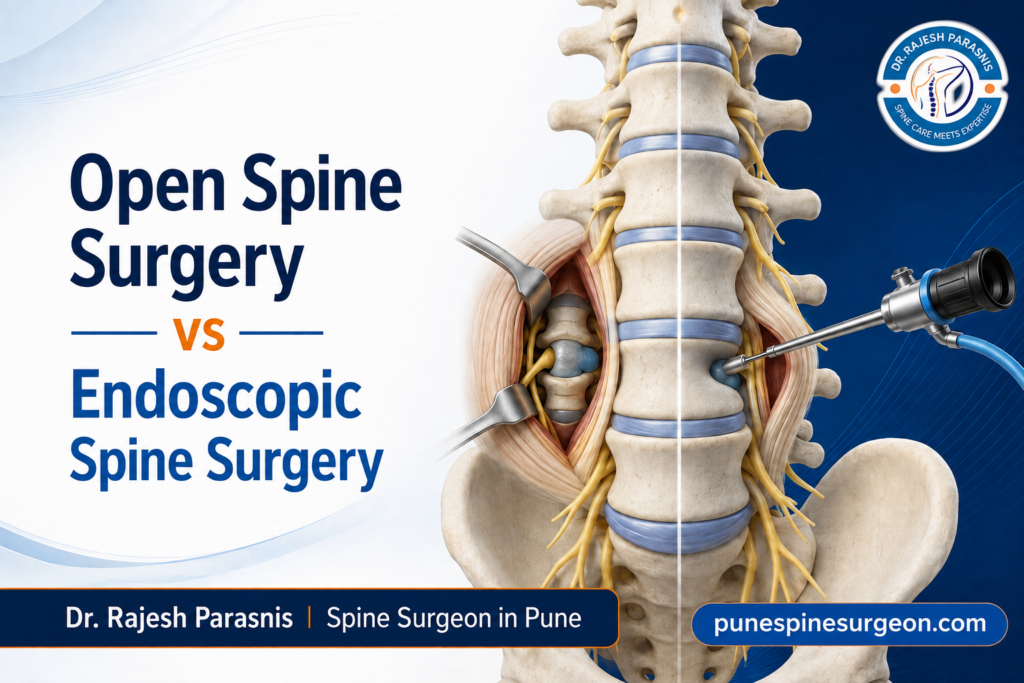
Open spine surgery vs endoscopic spine surgery explained by Dr. Rajesh Parasnis, Spine Surgeon in Pune

Open Spine Surgery vs Endoscopic Spine Surgery: Which Is Better?

When surgery is recommended for persistent back pain, nerve compression, a slipped disc or spinal stenosis, patients often ask whether open spine surgery or endoscopic spine surgery is the better option. Endoscopic surgery is commonly associated with smaller incisions and faster recovery, while open surgery may provide wider access for complex spinal problems. However, one method is not universally better than the other. The right surgical approach depends on the exact diagnosis, the number of spinal levels involved, the extent of nerve compression, spinal stability and the patient’s overall health. A detailed examination and review of MRI or CT findings by an experienced Spine Surgeon in Pune can help determine which technique is most appropriate. What Is Open Spine Surgery? Open spine surgery is a conventional surgical approach in which the surgeon makes an incision large enough to directly see and reach the affected part of the spine. The muscles and other tissues may need to be carefully moved aside to provide adequate access to the vertebrae, discs and compressed nerves. Open surgery may be used for procedures such as: Spinal decompression or laminectomy Complex spinal fusion Correction of spinal deformities Surgery involving multiple spinal levels Treatment of severe spinal instability Removal of certain spinal tumours Revision surgery following a previous spinal operation Although open surgery involves a larger incision, it allows the surgeon to clearly access a wider surgical area. This may be particularly important when extensive decompression, reconstruction or stabilisation is required. What Is Endoscopic Spine Surgery? Endoscopic spine surgery is a minimally invasive technique performed through a small incision. A thin instrument known as an endoscope, which contains a camera and light source, is inserted through a narrow surgical channel. The camera provides an enlarged view of the affected spinal structures on a monitor. According to the American Academy of Orthopaedic Surgeons, endoscopic discectomy is an advanced minimally invasive technique that may be used to remove a herniated disc in the lower back. Endoscopic spine surgery may be considered for selected conditions, including: Certain types of lumbar disc herniation Nerve root compression Sciatica caused by a slipped disc Selected cases of spinal canal or foraminal narrowing Some recurrent disc problems Persistent leg pain linked to localised nerve compression Not every spinal condition can be treated endoscopically. The location and size of the problem, spinal alignment and the presence of instability must be carefully assessed before recommending this approach. How Are the Two Procedures Different? The main difference lies in how the surgeon reaches the affected area. Open surgery creates a wider operative field, whereas endoscopic surgery uses a narrow working channel and camera. Size of the incision Open spine surgery generally requires a comparatively larger incision. Endoscopic surgery is performed through a much smaller incision, sometimes measuring only a few millimetres. Effect on surrounding tissues During open surgery, more muscle and soft tissue may need to be moved to expose the spine. An endoscopic procedure is designed to reach the problem through a targeted pathway with less disruption to the surrounding muscles. Surgical visibility Open surgery gives the surgeon a direct and wider view of the operative area. In endoscopic surgery, the surgeon works using a magnified camera view displayed on a screen. Recovery period Recovery depends on the actual procedure, diagnosis and individual health. Endoscopic surgery may allow earlier mobilisation and a shorter hospital stay in appropriately selected patients. Recovery after extensive open decompression or fusion may take longer because more tissue and bone work may be involved. Conditions that can be treated Endoscopic techniques are particularly useful for selected, localised problems. Open surgery remains important for complex conditions that require broad decompression, correction of deformity, fusion or treatment across several spinal levels. Potential Benefits of Endoscopic Spine Surgery The American Association of Neurological Surgeons notes that minimally invasive techniques may offer benefits such as less blood loss, reduced muscle damage, smaller scars and faster recovery in suitable cases. Possible benefits of endoscopic surgery include: Smaller surgical incision Reduced disturbance of muscles and soft tissues Potentially less postoperative discomfort Lower blood loss in many procedures Shorter hospitalisation in selected patients Earlier return to routine activities Smaller surgical scar These are potential advantages rather than guaranteed outcomes. Results depend on selecting the right patient, treating the correct pain source and performing the procedure safely. When May Open Spine Surgery Be More Appropriate? A smaller incision should not be the only factor used to choose a surgical technique. Open surgery may be safer or more effective when the condition is too extensive to treat through a narrow endoscopic channel. A Spine Surgeon in Pune may recommend an open procedure when a patient has: Severe or multilevel spinal stenosis Significant spinal instability Spondylolisthesis requiring fusion Major spinal deformity Complex fractures or tumours Extensive nerve compression Previous surgery with significant scar tissue A condition requiring screws, rods or other implants In these situations, wider access may allow the surgeon to perform complete decompression, restore stability and address multiple structural problems during the same operation. Does Endoscopic Surgery Have Any Risks? Endoscopic spine surgery is still a surgical procedure and is not free from risk. Possible complications may include infection, bleeding, nerve irritation, spinal fluid leakage, incomplete relief or recurrence of disc herniation. There may also be situations where the planned endoscopic procedure needs to be converted to a more extensive approach to treat the condition safely. Open spine surgery carries similar general surgical risks. The NHS lists potential complications of lumbar decompression surgery such as infection, spinal fluid leakage, nerve injury, persistent pain and spinal instability. The individual risk varies according to the procedure, medical history and severity of the spinal problem. Is Endoscopic Spine Surgery Always Better? No. Endoscopic spine surgery can be an excellent option for the right diagnosis, but it is not automatically the best choice for every patient. A small incision does not guarantee a better result. The primary purpose of surgery is to adequately relieve nerve compression, protect neurological function and stabilise the spine

Open Spine Surgery vs Endoscopic Spine Surgery: Which Is Better? Read More »
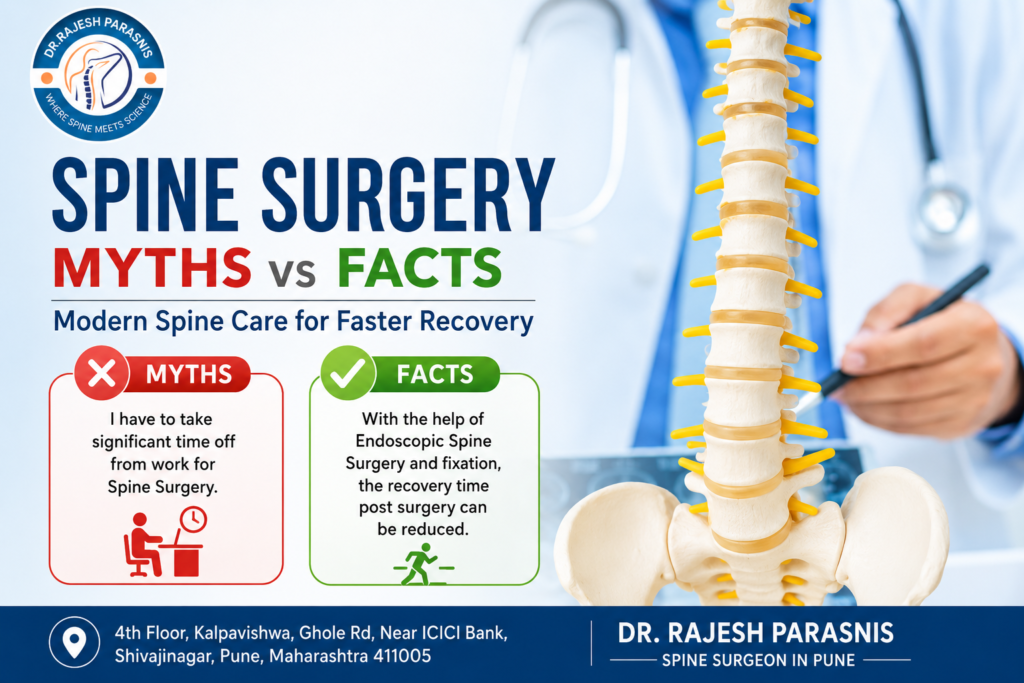
Spine Surgery Myths vs Facts – Faster Recovery with Modern Spine Surgery | Dr. Rajesh Parasnis

Spine Surgery Myths vs Facts: Does Spine Surgery Always Require Long Time Off Work?

Many people delay spine surgery in Pune because they believe it will keep them away from work for months. This is one of the most common misconceptions about modern spine care. Advances in surgical techniques have made many spine procedures safer, less invasive, and associated with faster recovery for appropriately selected patients. If you’re struggling with persistent back pain, sciatica, slipped disc, or spinal stenosis, consulting an experienced Spine Surgeon in Pune like Dr. Rajesh Parasnis can help you understand the best treatment options based on your condition. Myth: Spine Surgery Means Months Away from Work Many patients believe that undergoing spine surgery automatically means prolonged hospitalization and an extended leave from work. While recovery time depends on the type of surgery, the patient’s overall health, and the nature of their job, this belief is often based on older surgical techniques rather than current practices. Fear of long recovery often causes patients to postpone treatment, allowing their symptoms to worsen over time. Fact: Modern Spine Surgery Can Help Reduce Recovery Time With advanced techniques such as Endoscopic Spine Surgery and minimally invasive fixation procedures, many patients experience: Smaller incisions Less muscle damage Reduced post-operative pain Shorter hospital stay Earlier return to walking and daily activities Faster return to desk-based work in suitable cases However, recovery timelines vary for each patient. Individuals with physically demanding jobs may require more time before returning to work than those with sedentary occupations. When Should You Consider Spine Surgery? A Spine Surgeon in Pune may recommend surgery when: Persistent back or neck pain does not improve with conservative treatment Severe slipped disc causing leg pain (sciatica) Numbness or weakness in the arms or legs Spinal stenosis Nerve compression affecting daily activities Progressive neurological symptoms Surgery is generally considered only after a thorough clinical evaluation and when non-surgical treatments are no longer effective. Benefits of Early Consultation Delaying treatment due to myths may lead to worsening nerve compression and reduced quality of life. Early consultation allows timely diagnosis and appropriate treatment planning, which may include medications, physiotherapy, injections, or surgery depending on your condition. Why Choose Dr. Rajesh Parasnis? Dr. Rajesh Parasnis is an experienced Spine Surgeon in Pune specializing in the diagnosis and treatment of various spinal disorders. His patient-centered approach focuses on accurate diagnosis, conservative management whenever possible, and advanced surgical techniques when surgery is required. Whether you are experiencing chronic back pain, cervical problems, slipped disc, or sciatica, Dr. Parasnis offers personalized spine treatment in Pune designed to help patients regain mobility and improve their quality of life. Conclusion Don’t let outdated myths prevent you from seeking treatment. Modern spine surgery in Pune has evolved significantly, and many patients are able to recover faster than they expect when treated with appropriate minimally invasive techniques. The right diagnosis and treatment plan can help you return to your normal activities safely and confidently. If you’re suffering from persistent back or neck pain, schedule a consultation with Dr. Rajesh Parasnis to explore the most suitable spine treatment in Pune for your condition. Frequently Asked Questions (FAQs) 1. Does spine surgery always require months of bed rest? No. Many modern minimally invasive spine procedures allow patients to start walking within hours or the next day, with recovery depending on the procedure and individual health. 2. When can I return to work after spine surgery? The timeline varies based on your surgery and the type of work you do. Patients with desk jobs often return sooner than those performing heavy physical labor. 3. Is surgery the first treatment for back pain? No. Most spine conditions are initially managed with medications, physiotherapy, exercise, and lifestyle modifications. Surgery is recommended only when necessary. 4. What conditions can endoscopic spine surgery treat? It may be used for selected cases of slipped disc, sciatica, spinal stenosis, and certain nerve compression disorders, depending on clinical evaluation. 5. When should I consult a spine surgeon? If your back or neck pain persists for several weeks, radiates to the arms or legs, or causes weakness, numbness, or difficulty performing daily activities, you should consult a spine specialist.

Spine Surgery Myths vs Facts: Does Spine Surgery Always Require Long Time Off Work? Read More »

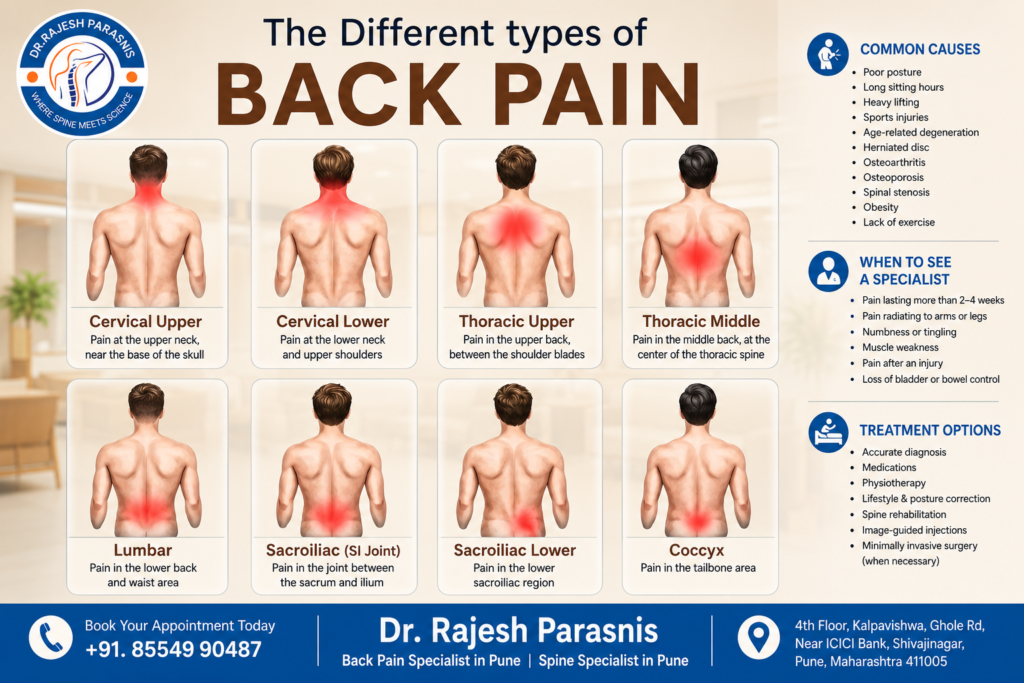
Different Types of Back Pain – Back Pain Treatment in Pune by Dr. Rajesh Parasnis

The Different Types of Back Pain: Understanding the Cause of Your Pain

Back pain is one of the most common health problems affecting people of all ages. Whether it’s a dull ache after a long day at work or a sharp pain that radiates down your legs, back pain should never be ignored. The location of your pain often provides important clues about the underlying condition and helps determine the most effective treatment. Different regions of the spine are associated with different causes and symptoms, making an accurate diagnosis essential for successful recovery. At Dr. Rajesh Parasnis Spine Clinic, Pune, we specialize in diagnosing and treating all types of spinal disorders using advanced, evidence-based, and minimally invasive techniques. Understanding the Different Types of Back Pain 1. Cervical Upper Pain (Upper Neck Pain) Pain at the upper part of the neck, near the base of the skull, is commonly associated with: Poor posture Muscle strain Tension headaches Cervical spondylosis Symptoms: Neck stiffness Headaches Difficulty turning the head Pain radiating to the shoulders 2. Cervical Lower Pain (Lower Neck & Shoulder Pain) Pain in the lower neck and upper shoulder region is often caused by: Cervical disc problems Pinched nerves Poor workstation ergonomics Long hours of mobile or computer use Symptoms: Neck pain Shoulder discomfort Tingling or numbness in the arms Weakness in the hands 3. Thoracic Upper Pain (Upper Back Pain) Pain between the shoulder blades may occur due to: Poor posture Muscle strain Sedentary lifestyle Spinal joint dysfunction Although less common, persistent upper back pain should be evaluated to rule out spinal conditions. 4. Thoracic Middle Pain (Mid Back Pain) Pain in the middle of the back can result from: Muscle fatigue Degenerative spine changes Compression fractures Scoliosis Persistent pain requires medical assessment to identify the underlying cause. 5. Lumbar Pain (Lower Back Pain) Lower back pain is the most common type of back pain and may develop because of: Muscle strain Degenerative disc disease Herniated (slipped) disc Lumbar spondylosis Spinal stenosis Symptoms include: Lower back stiffness Difficulty bending Pain while sitting or standing Pain radiating into the legs (Sciatica) 6. Sacroiliac (SI Joint) Pain The sacroiliac joints connect the spine to the pelvis. Pain in this region may occur because of: SI joint dysfunction Pregnancy Arthritis Injury Inflammation Patients often experience pain while climbing stairs, walking, or standing for long periods. 7. Sacroiliac Lower Pain Pain lower in the pelvis or buttock region may indicate: SI joint instability Ligament strain Pelvic imbalance Pain often worsens with prolonged standing or changing positions. 8. Coccyx Pain (Tailbone Pain) Pain around the tailbone can occur after: Falls Childbirth Prolonged sitting Trauma Patients usually feel discomfort while sitting or getting up from a chair. Common Causes of Back Pain Back pain can develop due to several reasons, including: Poor posture Long sitting hours Heavy lifting Sports injuries Age-related degeneration Herniated disc Osteoarthritis Osteoporosis Spinal stenosis Obesity Lack of exercise Identifying the exact cause is essential before beginning treatment. When Should You Consult a Spine Specialist? Seek medical attention if your back pain: Lasts longer than 2–4 weeks Radiates to the legs or arms Causes numbness or tingling Leads to muscle weakness Worsens while walking Occurs after an injury Affects bowel or bladder control Interferes with daily activities or sleep These symptoms may indicate nerve compression or other spinal disorders that require specialist evaluation. Back Pain Treatment in Pune At Dr. Rajesh Parasnis Spine Clinic, treatment is personalized based on the cause of your pain. Options may include: Comprehensive spine evaluation Digital X-rays and MRI when needed Medications Physiotherapy Lifestyle and posture correction Spine rehabilitation Image-guided injections Minimally invasive spine surgery (only when necessary) The goal is always to relieve pain, restore movement, and help patients return to an active lifestyle as quickly as possible. Tips to Prevent Back Pain Maintain correct posture while sitting and standing. Exercise regularly to strengthen your back and core muscles. Lift heavy objects correctly using your legs. Avoid prolonged sitting. Maintain a healthy body weight. Use an ergonomic workstation. Stretch regularly during long working hours. Why Choose Dr. Rajesh Parasnis? Dr. Rajesh Parasnis is a renowned Back Pain Specialist in Pune and Spine Specialist in Pune, experienced in treating simple to complex spinal disorders with advanced, patient-focused care. His approach emphasizes accurate diagnosis, conservative treatment whenever possible, and minimally invasive spine surgery when required. Conclusion Back pain is not a disease—it’s a symptom that can arise from many different conditions. Understanding where your pain is located can help identify its cause and guide the right treatment. Early diagnosis and expert spine care can prevent complications and improve your quality of life. If you’re experiencing persistent neck, upper back, or lower back pain, consult Dr. Rajesh Parasnis, a trusted Back Pain Specialist in Pune, for expert evaluation and personalized treatment.

The Different Types of Back Pain: Understanding the Cause of Your Pain Read More »