
Dr. Rajesh Parasnis

spine treatment in pune

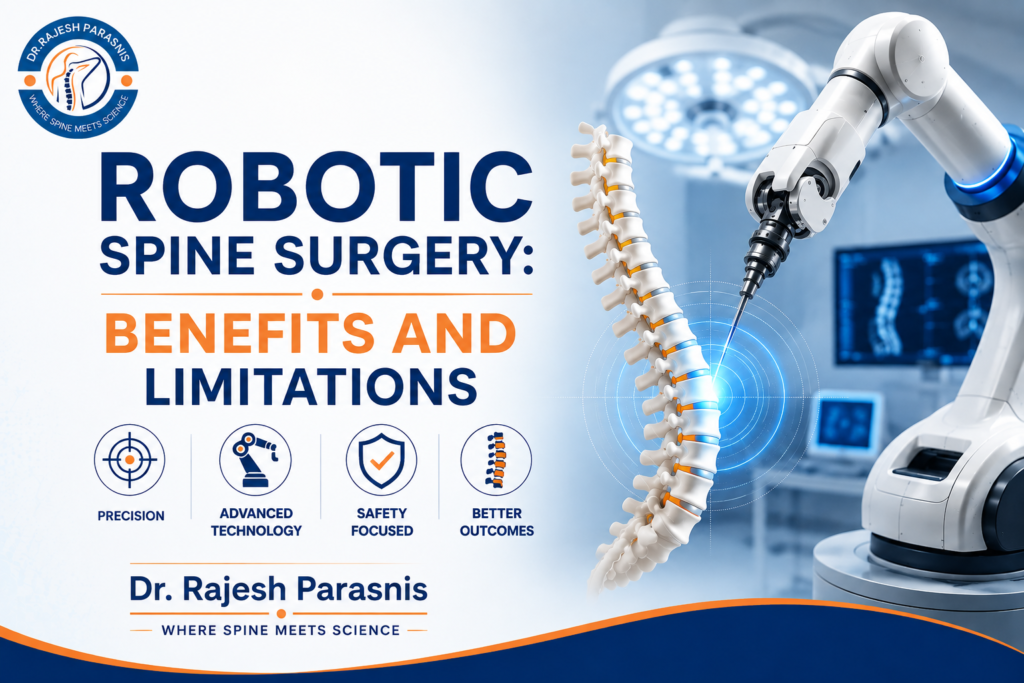
Robotic spine surgery technology assisting with precision during spine surgery

Robotic Spine Surgery: Benefits and Limitations

Advances in medical technology have introduced new tools that can assist surgeons during complex procedures. Robotic spine surgery is one such development that uses advanced computer-based planning and guidance systems to support the surgeon during selected spine operations. However, it is important to understand that robotic technology does not replace the surgeon. The surgeon remains in control of the procedure and uses the technology as an additional tool when it is considered appropriate. For patients exploring treatment options for certain spine conditions, understanding both the potential benefits and limitations of robotic spine surgery can help them have a more informed discussion with their spine specialist. Dr. Rajesh Parasnis provides comprehensive evaluation and guidance based on the patient’s individual condition, symptoms, imaging findings and overall treatment needs. What Is Robotic Spine Surgery? Robotic spine surgery involves the use of specialised technology that may help the surgical team plan and guide specific parts of a spine procedure. Depending on the procedure and technology used, robotic guidance can assist with planning the placement of surgical instruments or implants. Before surgery, imaging studies may be used to create a detailed surgical plan. During the procedure, the robotic system can provide guidance designed to help the surgeon follow the planned approach. It is important to remember that a robotic system is not performing surgery independently. A qualified spine surgeon makes the clinical decisions and performs the operation. Patients considering spine surgery should discuss whether robotic assistance is suitable for their particular condition, as not every spine problem requires or benefits from robotic technology. Potential Benefits of Robotic Spine Surgery Robotic technology may offer several potential advantages in appropriately selected procedures. 1. May Assist With Surgical Planning Detailed pre-operative planning can help the surgeon prepare for the procedure based on the patient’s individual spinal anatomy. This can be particularly valuable in selected complex cases. 2. May Support Precision and Guidance Robotic and navigation technology can provide additional guidance during certain stages of surgery, such as the placement of specific spinal implants. The potential benefit depends on the type of surgery, the technology available and the individual patient’s anatomy. 3. May Be Useful in Selected Complex Procedures Some spinal conditions and revision procedures can involve complex anatomy. Advanced planning and guidance technology may be considered as an additional tool in selected cases. 4. May Support Minimally Invasive Surgical Approaches In some appropriate cases, robotic guidance may be used alongside minimally invasive spine surgery techniques. However, the surgical approach depends on the condition being treated and the surgeon’s clinical assessment. 5. Improved Visualisation and Planning Technology-assisted surgery can provide the surgical team with additional anatomical information and real-time guidance, depending on the system being used. It is important to note that these are potential benefits and do not guarantee a specific surgical outcome for every patient. Limitations of Robotic Spine Surgery While robotic technology has expanded the tools available to spine surgeons, it also has important limitations. 1. It Is Not Suitable for Every Patient Not all spinal conditions require robotic spine surgery. The decision depends on several factors, including the diagnosis, severity of the condition, spinal anatomy, previous surgeries and the goals of treatment. In many cases, non-surgical treatment or conventional surgical techniques may be more appropriate. 2. Technology Does Not Replace Surgical Expertise The success and safety of a procedure depend on many factors, including the surgeon’s training, experience, clinical judgement and careful patient selection. A robotic system is an assisting technology and does not replace the expertise of the surgeon. 3. Surgery Still Carries Risks Using robotic assistance does not eliminate the general risks associated with spine surgery. Depending on the procedure, potential risks may include infection, bleeding, nerve-related complications, implant-related problems, persistent symptoms or the need for further treatment. The risks vary from patient to patient and should be discussed with the treating spine surgeon in pune. 4. Not Every Procedure Requires Robotic Technology The availability of advanced technology does not mean it is automatically the best option for every surgery. The most suitable treatment should be chosen based on medical need rather than technology alone. 5. Cost and Availability May Vary Robotic systems may not be available at every hospital or surgical centre. Costs and insurance coverage can also vary depending on the healthcare facility, procedure and individual circumstances. Is Robotic Spine Surgery Right for You? The answer depends on your individual condition. A proper evaluation is essential before deciding whether any type of spine surgery is needed and, if surgery is recommended, which surgical approach may be suitable. A spine specialist may consider factors such as: Your specific spinal diagnosis Severity and duration of symptoms Findings from MRI, CT scans or other investigations Presence of nerve compression or spinal instability Response to non-surgical treatment Previous spine surgery Overall health and medical history The expected goals and limitations of treatment A thorough consultation allows patients to understand the available options and make an informed decision. Robotic Spine Surgery Is a Tool, Not a Replacement for Good Clinical Judgement One of the most important things for patients to understand is that technology alone does not determine the success of treatment. The right diagnosis, appropriate patient selection, careful surgical planning and experienced clinical judgement remain essential. For some patients, robotic guidance may be a useful part of the surgical plan. For others, a different approach may be more suitable. The best treatment is the one that addresses the patient’s condition appropriately while considering individual risks and expected benefits. Dr. Rajesh Parasnis offers personalised assessment for patients with various spine conditions, helping them understand suitable treatment options based on their individual clinical needs. When Should You Consult a Spine Specialist? Consider consulting a qualified spine specialist in pune if you experience persistent or worsening symptoms such as: Ongoing neck or back pain that does not improve Pain radiating into the arms or legs Numbness or tingling Muscle weakness Difficulty walking or maintaining balance Symptoms that continue despite appropriate conservative treatment Sudden or severe weakness, loss

Robotic Spine Surgery: Benefits and Limitations Read More »

Patient experiencing neck pain with illustration of cervical spine and neck pain warning signs, featuring Dr. Rajesh Parasnis.

Neck Pain Warning Signs: Is Your Pain Serious?

Neck pain is a common problem that can affect people of different ages and lifestyles. Long hours at a desk, poor posture, frequent mobile phone use, muscle strain, injuries, and age-related changes in the spine may all contribute to discomfort. While many episodes of neck pain may improve with appropriate rest and conservative care, some symptoms should not be ignored. Understanding neck pain warning signs can help you decide when it may be appropriate to seek medical evaluation. Persistent or worsening symptoms deserve proper attention, particularly when they affect daily activities, sleep, movement, or are associated with symptoms in the arms or hands. If you are experiencing ongoing neck-related concerns, Dr. Rajesh Parasnis can provide a detailed assessment and guidance based on your individual symptoms and condition. Common Causes of Neck Pain The neck, also called the cervical spine, supports the weight and movement of the head. Muscles, bones, discs, joints, ligaments, and nerves work together to allow normal movement. Problems affecting any of these structures may contribute to pain or stiffness. Some common causes include: Muscle strain or tension Poor sitting or sleeping posture Prolonged computer or mobile phone use Sudden or repetitive neck movements Injuries affecting the neck Age-related changes in the cervical spine Disc-related problems Joint or nerve-related conditions Not every case of neck pain has the same cause. A proper examination can help identify the possible source of symptoms and determine whether further evaluation is needed. Neck Pain Warning Signs You Should Not Ignore 1. Neck Pain That Persists or Keeps Returning A mild episode of neck discomfort may sometimes improve over time. However, if the pain continues for several days or weeks, repeatedly returns, or gradually becomes worse, it may be worth consulting a qualified medical professional. Persistent symptoms can have different causes, and self-diagnosis may not always be reliable. An evaluation can help determine the next appropriate steps. 2. Pain Spreading to the Shoulder or Arm Neck pain that travels into the shoulder, arm, or hand may require medical attention, especially if it is persistent or worsening. In some situations, irritation or pressure involving nerves in the cervical spine may contribute to radiating symptoms. This does not automatically indicate a serious condition, but an assessment can help clarify the possible cause. 3. Numbness, Tingling, or Weakness Symptoms such as numbness, tingling, unusual sensations, or weakness in the arm or hand should not be overlooked. These symptoms may occur for different reasons, including conditions involving nerves. If you notice changes in strength, grip, coordination, or sensation, seeking timely medical advice is important. Dr. Rajesh Parasnis can evaluate symptoms through a clinical examination and recommend further investigations when appropriate. 4. Severe Neck Pain After an Injury Neck pain following a fall, accident, sports injury, or other significant trauma should be assessed carefully. Avoid forcefully moving or manipulating the neck after an injury without professional guidance. Depending on the nature of the injury and symptoms, a doctor may recommend an examination or imaging studies to understand the condition better. 5. Difficulty With Balance or Coordination Neck symptoms accompanied by changes in balance, walking, coordination, or hand function should be evaluated by a healthcare professional. These symptoms can have different possible causes and should not be ignored. A detailed assessment is important for identifying whether the symptoms may be related to the cervical spine or another medical condition. 6. Pain That Significantly Affects Daily Life When neck pain interferes with work, sleep, driving, exercise, or routine activities, it may be time to seek professional guidance. Instead of repeatedly relying on temporary measures, understanding the possible cause may help guide appropriate management. When Should You Consult a Spine Specialist? You may consider consulting a Spine Specialist if your neck pain is persistent, recurrent, worsening, or associated with symptoms such as pain radiating to the arm, numbness, tingling, or weakness. A consultation may include: Discussion of your symptoms and medical history Physical examination Assessment of neck movement and neurological function Recommendations regarding imaging or other tests, if clinically appropriate Guidance regarding suitable treatment options Not every person with neck pain requires surgery. Depending on the diagnosis and severity of symptoms, management may involve conservative approaches, rehabilitation, medications prescribed by a qualified doctor, or other treatments. The appropriate option depends on the individual’s condition. Can Poor Posture Cause Neck Pain? Poor posture can place additional strain on the muscles and structures around the neck. Looking down for long periods, working at an improperly positioned computer screen, or sitting for extended periods without breaks may contribute to discomfort. Simple habits that may support better neck health include: Maintaining a comfortable and supported sitting position Taking regular breaks during prolonged screen work Positioning screens at an appropriate height Avoiding prolonged awkward neck positions Following exercises or rehabilitation advice provided by a qualified professional However, persistent or severe pain should not simply be attributed to posture without proper evaluation. Importance of an Accurate Diagnosis Because neck pain can have many possible causes, the right treatment depends on identifying the underlying problem as accurately as possible. What may be suitable for one person may not be appropriate for another. Avoid starting intensive exercises, neck manipulation, or other treatments without understanding the cause of persistent symptoms. A qualified healthcare professional can recommend an approach based on your medical history, examination findings, and overall condition. Consult Dr. Rajesh Parasnis for Neck and Spine Concerns If you are experiencing persistent neck pain or concerning symptoms, consulting an experienced medical professional can help you understand your condition and available options. Dr. Rajesh Parasnis provides professional evaluation and guidance for patients with various spine problems and neck-related concerns. The focus is on understanding each patient’s symptoms and recommending appropriate next steps based on individual clinical needs. Final Thoughts Most neck pain does not necessarily indicate a serious problem, but certain symptoms should not be ignored. Persistent pain, worsening discomfort, pain spreading to the arms, numbness, tingling, weakness, balance problems, or symptoms following significant trauma may require medical evaluation. Early

Neck Pain Warning Signs: Is Your Pain Serious? Read More »

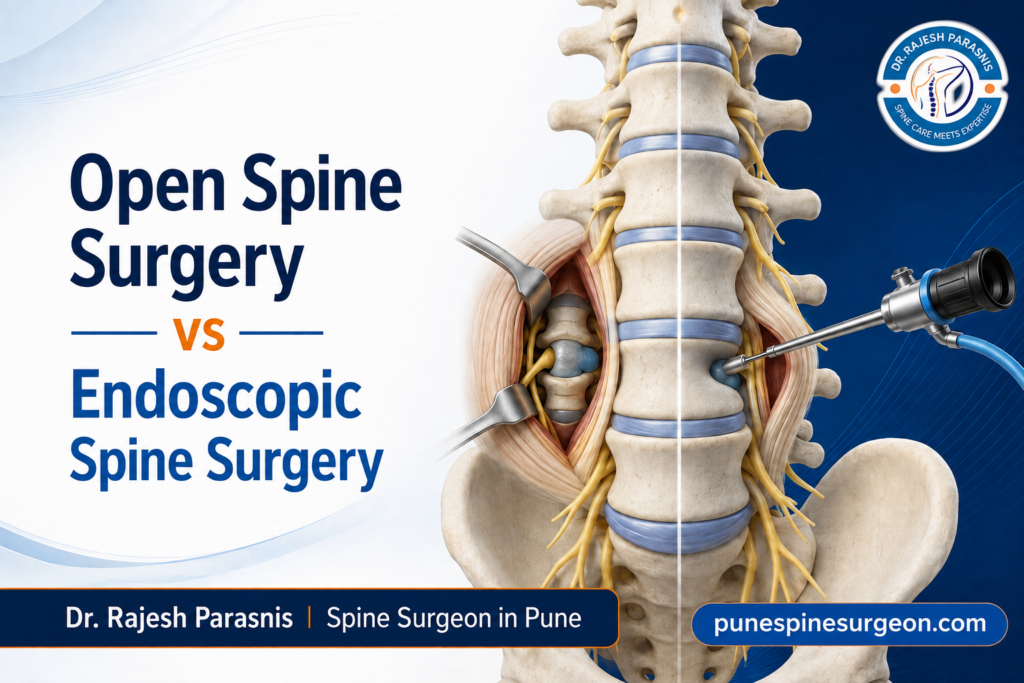
Open spine surgery vs endoscopic spine surgery explained by Dr. Rajesh Parasnis, Spine Surgeon in Pune

Open Spine Surgery vs Endoscopic Spine Surgery: Which Is Better?

When surgery is recommended for persistent back pain, nerve compression, a slipped disc or spinal stenosis, patients often ask whether open spine surgery or endoscopic spine surgery is the better option. Endoscopic surgery is commonly associated with smaller incisions and faster recovery, while open surgery may provide wider access for complex spinal problems. However, one method is not universally better than the other. The right surgical approach depends on the exact diagnosis, the number of spinal levels involved, the extent of nerve compression, spinal stability and the patient’s overall health. A detailed examination and review of MRI or CT findings by an experienced Spine Surgeon in Pune can help determine which technique is most appropriate. What Is Open Spine Surgery? Open spine surgery is a conventional surgical approach in which the surgeon makes an incision large enough to directly see and reach the affected part of the spine. The muscles and other tissues may need to be carefully moved aside to provide adequate access to the vertebrae, discs and compressed nerves. Open surgery may be used for procedures such as: Spinal decompression or laminectomy Complex spinal fusion Correction of spinal deformities Surgery involving multiple spinal levels Treatment of severe spinal instability Removal of certain spinal tumours Revision surgery following a previous spinal operation Although open surgery involves a larger incision, it allows the surgeon to clearly access a wider surgical area. This may be particularly important when extensive decompression, reconstruction or stabilisation is required. What Is Endoscopic Spine Surgery? Endoscopic spine surgery is a minimally invasive technique performed through a small incision. A thin instrument known as an endoscope, which contains a camera and light source, is inserted through a narrow surgical channel. The camera provides an enlarged view of the affected spinal structures on a monitor. According to the American Academy of Orthopaedic Surgeons, endoscopic discectomy is an advanced minimally invasive technique that may be used to remove a herniated disc in the lower back. Endoscopic spine surgery may be considered for selected conditions, including: Certain types of lumbar disc herniation Nerve root compression Sciatica caused by a slipped disc Selected cases of spinal canal or foraminal narrowing Some recurrent disc problems Persistent leg pain linked to localised nerve compression Not every spinal condition can be treated endoscopically. The location and size of the problem, spinal alignment and the presence of instability must be carefully assessed before recommending this approach. How Are the Two Procedures Different? The main difference lies in how the surgeon reaches the affected area. Open surgery creates a wider operative field, whereas endoscopic surgery uses a narrow working channel and camera. Size of the incision Open spine surgery generally requires a comparatively larger incision. Endoscopic surgery is performed through a much smaller incision, sometimes measuring only a few millimetres. Effect on surrounding tissues During open surgery, more muscle and soft tissue may need to be moved to expose the spine. An endoscopic procedure is designed to reach the problem through a targeted pathway with less disruption to the surrounding muscles. Surgical visibility Open surgery gives the surgeon a direct and wider view of the operative area. In endoscopic surgery, the surgeon works using a magnified camera view displayed on a screen. Recovery period Recovery depends on the actual procedure, diagnosis and individual health. Endoscopic surgery may allow earlier mobilisation and a shorter hospital stay in appropriately selected patients. Recovery after extensive open decompression or fusion may take longer because more tissue and bone work may be involved. Conditions that can be treated Endoscopic techniques are particularly useful for selected, localised problems. Open surgery remains important for complex conditions that require broad decompression, correction of deformity, fusion or treatment across several spinal levels. Potential Benefits of Endoscopic Spine Surgery The American Association of Neurological Surgeons notes that minimally invasive techniques may offer benefits such as less blood loss, reduced muscle damage, smaller scars and faster recovery in suitable cases. Possible benefits of endoscopic surgery include: Smaller surgical incision Reduced disturbance of muscles and soft tissues Potentially less postoperative discomfort Lower blood loss in many procedures Shorter hospitalisation in selected patients Earlier return to routine activities Smaller surgical scar These are potential advantages rather than guaranteed outcomes. Results depend on selecting the right patient, treating the correct pain source and performing the procedure safely. When May Open Spine Surgery Be More Appropriate? A smaller incision should not be the only factor used to choose a surgical technique. Open surgery may be safer or more effective when the condition is too extensive to treat through a narrow endoscopic channel. A Spine Surgeon in Pune may recommend an open procedure when a patient has: Severe or multilevel spinal stenosis Significant spinal instability Spondylolisthesis requiring fusion Major spinal deformity Complex fractures or tumours Extensive nerve compression Previous surgery with significant scar tissue A condition requiring screws, rods or other implants In these situations, wider access may allow the surgeon to perform complete decompression, restore stability and address multiple structural problems during the same operation. Does Endoscopic Surgery Have Any Risks? Endoscopic spine surgery is still a surgical procedure and is not free from risk. Possible complications may include infection, bleeding, nerve irritation, spinal fluid leakage, incomplete relief or recurrence of disc herniation. There may also be situations where the planned endoscopic procedure needs to be converted to a more extensive approach to treat the condition safely. Open spine surgery carries similar general surgical risks. The NHS lists potential complications of lumbar decompression surgery such as infection, spinal fluid leakage, nerve injury, persistent pain and spinal instability. The individual risk varies according to the procedure, medical history and severity of the spinal problem. Is Endoscopic Spine Surgery Always Better? No. Endoscopic spine surgery can be an excellent option for the right diagnosis, but it is not automatically the best choice for every patient. A small incision does not guarantee a better result. The primary purpose of surgery is to adequately relieve nerve compression, protect neurological function and stabilise the spine

Open Spine Surgery vs Endoscopic Spine Surgery: Which Is Better? Read More »

Slip Disc (Herniated Disc) Treatment in Pune by Dr. Rajesh Parasnis, Spine Specialist offering advanced diagnosis, non-surgical care, and minimally invasive spine surgery.

Herniated Disc | Get Back on Track – Expert Spine Care by Dr. Rajesh Parasnis

A slip disc, also known as a herniated disc, is one of the most common causes of back pain and sciatica. It can make everyday activities such as sitting, walking, bending, or lifting objects painful and difficult. Early diagnosis and the right treatment can help you recover faster and prevent long-term complications. If you’re looking for Slip Disc Treatment in Pune or Herniated Disc Treatment in Pune, Dr. Rajesh Parasnis, an experienced Spine Specialist in Pune, provides comprehensive diagnosis and advanced treatment options tailored to each patient’s condition. What is a Herniated Disc? The spine consists of vertebrae separated by soft, cushion-like discs that absorb shock. When the outer layer of a disc tears or weakens, the inner gel-like material bulges or leaks out. This condition is known as a herniated disc or slip disc. The protruding disc can compress nearby nerves, leading to pain, numbness, weakness, and reduced mobility. Common Symptoms of a Slip Disc Symptoms vary depending on the location and severity of the disc herniation. Common signs include: Persistent lower back or neck pain Pain radiating to the leg (sciatica) or arm Numbness or tingling sensation Muscle weakness Difficulty standing or walking for long periods Increased pain while coughing, sneezing, or bending Ignoring these symptoms may worsen nerve compression and delay recovery. Causes and Risk Factors Several factors can contribute to a herniated disc: Age-related disc degeneration Improper lifting techniques Repetitive bending or twisting Obesity Sedentary lifestyle Sudden injury or trauma Poor posture Smoking Maintaining spinal health through exercise and proper ergonomics can significantly reduce the risk. Diagnosis by Dr. Rajesh Parasnis An accurate diagnosis is essential for effective treatment. Dr. Rajesh Parasnis performs: Detailed medical history Physical and neurological examination MRI scan (when required) X-rays to assess spinal alignment Advanced imaging for complex spine conditions A personalized treatment plan is then designed based on the severity of the disc problem. Advanced Slip Disc Treatment in Pune Most patients recover without surgery when treated early. Non-Surgical Treatment Pain management Anti-inflammatory medications Physiotherapy Core strengthening exercises Lifestyle modification Activity and posture correction Guided rehabilitation Minimally Invasive Spine Surgery If conservative treatment fails or significant nerve compression is present, minimally invasive spine surgery may be recommended. Benefits include: Smaller incisions Less muscle damage Reduced pain Shorter hospital stay Faster recovery Earlier return to daily activities Why Choose Dr. Rajesh Parasnis? Dr. Rajesh Parasnis is a trusted Spine Specialist in Pune known for evidence-based treatment and patient-focused care. Highlights Extensive experience in spine disorders Personalized treatment plans Advanced minimally invasive techniques Comprehensive rehabilitation guidance Focus on long-term pain relief and improved mobility When Should You Visit a Spine Specialist? Consult a spine specialist if you experience: Back pain lasting more than two weeks Pain spreading to the legs or arms Tingling or numbness Muscle weakness Difficulty walking Loss of bladder or bowel control (medical emergency) Early treatment improves outcomes and reduces the likelihood of surgery. Book Your Spine Consultation Living with a herniated disc doesn’t have to limit your lifestyle. With timely diagnosis and expert care, most patients experience significant pain relief and regain normal function. If you’re searching for the best Slip Disc Treatment in Pune or Herniated Disc Treatment in Pune, schedule a consultation with Dr. Rajesh Parasnis, Spine Specialist in Pune, for expert evaluation and advanced spine care.

Herniated Disc | Get Back on Track – Expert Spine Care by Dr. Rajesh Parasnis Read More »

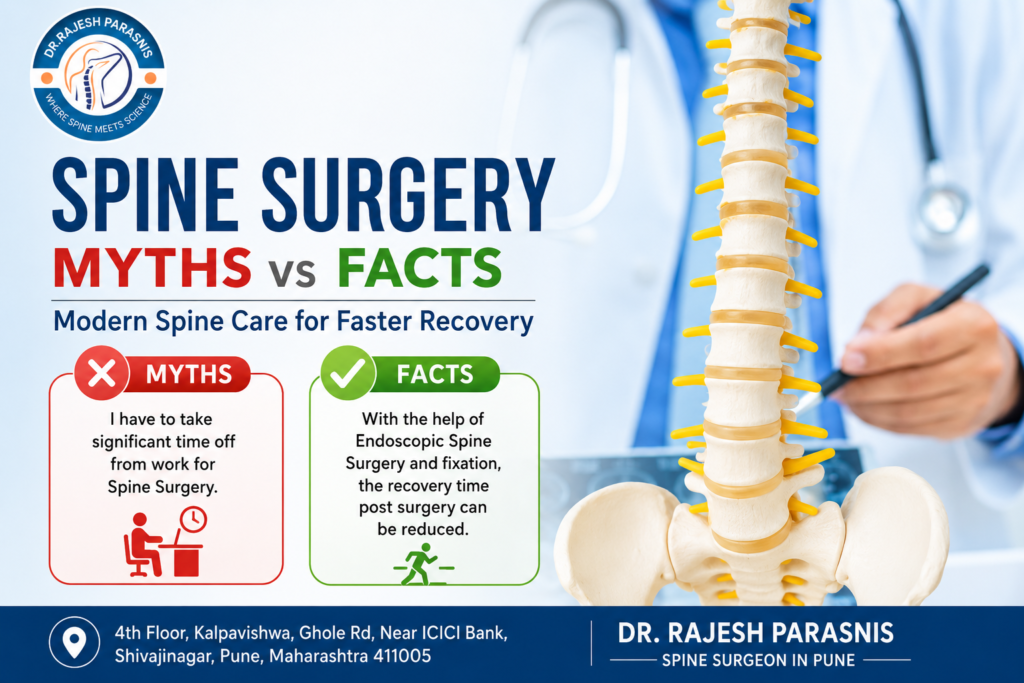
Spine Surgery Myths vs Facts – Faster Recovery with Modern Spine Surgery | Dr. Rajesh Parasnis

Spine Surgery Myths vs Facts: Does Spine Surgery Always Require Long Time Off Work?

Many people delay spine surgery in Pune because they believe it will keep them away from work for months. This is one of the most common misconceptions about modern spine care. Advances in surgical techniques have made many spine procedures safer, less invasive, and associated with faster recovery for appropriately selected patients. If you’re struggling with persistent back pain, sciatica, slipped disc, or spinal stenosis, consulting an experienced Spine Surgeon in Pune like Dr. Rajesh Parasnis can help you understand the best treatment options based on your condition. Myth: Spine Surgery Means Months Away from Work Many patients believe that undergoing spine surgery automatically means prolonged hospitalization and an extended leave from work. While recovery time depends on the type of surgery, the patient’s overall health, and the nature of their job, this belief is often based on older surgical techniques rather than current practices. Fear of long recovery often causes patients to postpone treatment, allowing their symptoms to worsen over time. Fact: Modern Spine Surgery Can Help Reduce Recovery Time With advanced techniques such as Endoscopic Spine Surgery and minimally invasive fixation procedures, many patients experience: Smaller incisions Less muscle damage Reduced post-operative pain Shorter hospital stay Earlier return to walking and daily activities Faster return to desk-based work in suitable cases However, recovery timelines vary for each patient. Individuals with physically demanding jobs may require more time before returning to work than those with sedentary occupations. When Should You Consider Spine Surgery? A Spine Surgeon in Pune may recommend surgery when: Persistent back or neck pain does not improve with conservative treatment Severe slipped disc causing leg pain (sciatica) Numbness or weakness in the arms or legs Spinal stenosis Nerve compression affecting daily activities Progressive neurological symptoms Surgery is generally considered only after a thorough clinical evaluation and when non-surgical treatments are no longer effective. Benefits of Early Consultation Delaying treatment due to myths may lead to worsening nerve compression and reduced quality of life. Early consultation allows timely diagnosis and appropriate treatment planning, which may include medications, physiotherapy, injections, or surgery depending on your condition. Why Choose Dr. Rajesh Parasnis? Dr. Rajesh Parasnis is an experienced Spine Surgeon in Pune specializing in the diagnosis and treatment of various spinal disorders. His patient-centered approach focuses on accurate diagnosis, conservative management whenever possible, and advanced surgical techniques when surgery is required. Whether you are experiencing chronic back pain, cervical problems, slipped disc, or sciatica, Dr. Parasnis offers personalized spine treatment in Pune designed to help patients regain mobility and improve their quality of life. Conclusion Don’t let outdated myths prevent you from seeking treatment. Modern spine surgery in Pune has evolved significantly, and many patients are able to recover faster than they expect when treated with appropriate minimally invasive techniques. The right diagnosis and treatment plan can help you return to your normal activities safely and confidently. If you’re suffering from persistent back or neck pain, schedule a consultation with Dr. Rajesh Parasnis to explore the most suitable spine treatment in Pune for your condition. Frequently Asked Questions (FAQs) 1. Does spine surgery always require months of bed rest? No. Many modern minimally invasive spine procedures allow patients to start walking within hours or the next day, with recovery depending on the procedure and individual health. 2. When can I return to work after spine surgery? The timeline varies based on your surgery and the type of work you do. Patients with desk jobs often return sooner than those performing heavy physical labor. 3. Is surgery the first treatment for back pain? No. Most spine conditions are initially managed with medications, physiotherapy, exercise, and lifestyle modifications. Surgery is recommended only when necessary. 4. What conditions can endoscopic spine surgery treat? It may be used for selected cases of slipped disc, sciatica, spinal stenosis, and certain nerve compression disorders, depending on clinical evaluation. 5. When should I consult a spine surgeon? If your back or neck pain persists for several weeks, radiates to the arms or legs, or causes weakness, numbness, or difficulty performing daily activities, you should consult a spine specialist.

Spine Surgery Myths vs Facts: Does Spine Surgery Always Require Long Time Off Work? Read More »